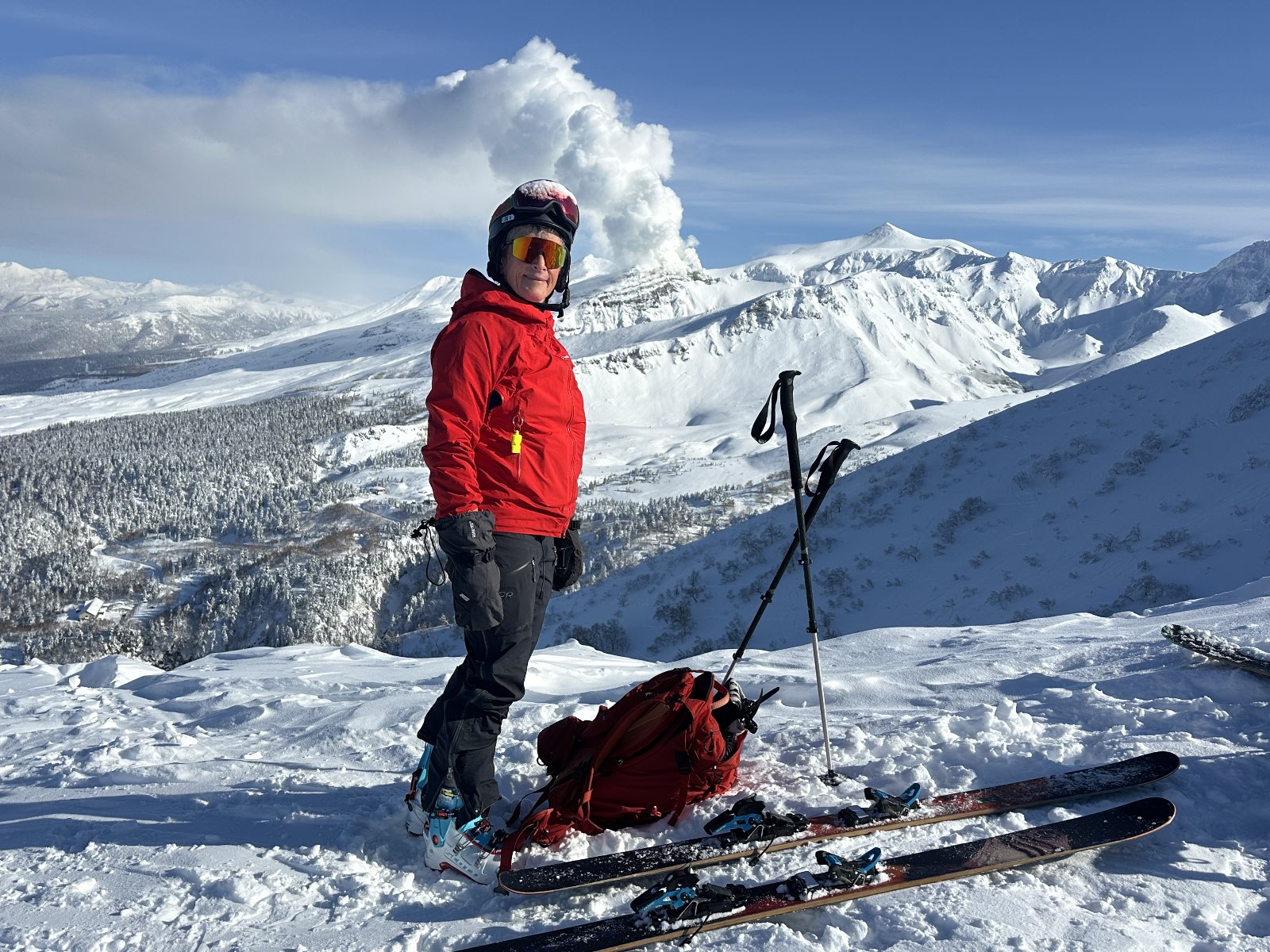
No lift assist here – your legs have to do all the work. Daisetsuzan National Park, Hokkaido.
E-biking and AI are two technologies I am wary of using. I came up with this simile recently when reading a comment on LinkedIn by someone prominent in the field of AI. The person was questioning their reluctance to use AI to critique their own work and asking if/why other people were reluctant.
My first thought was, that’s intellectually lazy, not doing the work of pulling apart your own motivations but relying on others to do the work for you. However, this sort of behaviour is so prevalent on social media it’s barely worth commenting on e.g. all the people writing, “I am going to country X for 3 weeks of cycling, can you tell me where I should go?” My second thought was, intellectual laziness is exactly what AI leads to.
AI, and LLMs in particular at present, are a tool that can be used for better or worse like so many tools humans have invented. It’s such a tricky nexus and slippery slope…do I wish I was still using my grandfather’s slide rule that sits on my display shelf? No, I don’t. I was very happy to use a digital calculator from high school, and now conversion apps. Is my brain better off if I do calculations in my head? Without a doubt, but I can do so many more calculations so quickly digitally. However, I first learned to do all those calculations from scratch and I still make myself do mental arithmetic to keep my brain in practice, so it can tell me if the digital result appears to be the wrong type of number.
When it comes to e-biking, I’m not dissing e-bikes in general because the more people cycling than driving, the better. But for me, I don’t want to get used to e-biking because I don’t want to lose the strength in my muscles I get from unpowered cycling. I’ve heard lots of people say they stay as fit e-biking as normal biking. However, when we cycle with e-bikers that doesn’t generally appear to be the case. Further, e-bikes kick in power when you have to work the hardest, so it becomes difficult to push your strength and aerobic limits. Conversely, it becomes very easy to not notice the strength you are losing as the e-bike keeps providing more power, invisibly.
There’s also a bottom line for me regarding e-biking in that, while I want to cycle tour/bikepack in remote places without power sources, I need to be able to pedal a bicycle without any assistance. Consequently, I’ll keep ‘normal’ biking for as long as I can bike to train my body to perform to its maximum as long as it can.
I have the same feeling about AI in terms of training. I have trained my brain over decades e.g. to rapidly take in, analyse and reformulate written text so it is intelligible to the particular audience the text is aimed at. In the process of reading and analysing text, I have upskilled my brain with the new information and reformulated my existing knowledge, combined with the new knowledge. Then I’ve rewritten the text, again upskilling my ability to communicate clearly – targetting my writing to the particular audience. I get feedback on my interpretation and writing based on how much clients take up my suggestions. I could ask AI to rewrite the text for me but where would that leave my brain? Being trained less and becoming less able.
You could argue the AI might do a better job. There are many people, and digital agents, who are more capable than me. However, the point of my life is to be as good at what I’m doing as I can be. That requires work and practice, and practice can’t be handed off. My cello playing isn’t going to get better if I get a digital assistant to practice for me. My ability to walk uphill when ski touring isn’t increased by taking a ski lift. However, there’s a flaw in my logic. My ability to ski downhill is increased by being able to do multiple downhill runs in quick succession, rather than 5 minutes of downhill for every hour of walking uphill. Being able to ski difficult downhills is useful when you are ski touring and come across steep terrain or icy snow you have to navigate. So do I need to compromise? Take the lift sometimes to improve my downhill skiing?
Yes, taking a ski lift will help my downhill skiing. And taking my bike on a lift can allow me to improve my downhill mountain biking. But neither of these changes my experience of walking or cycling uphill. The insidious part of e-biking uphill is that, when you next get on your ‘normal’ bike, it feels like someone left the brakes on. The e-bike experience makes normal biking feel unpleasantly hard, where it was previously perfectly enjoyable. In other words, for me uplift works in a way that e-biking does not.
How does this translate to use of AI? I’d suggest it’s about being thoughtful regarding which tasks you want AI to assist with and using AI in a way that doesn’t leave you reluctant to carry out essential work for training your own brain. Let’s take web searches as an example. I’ve got pretty good at web searching but I don’t see it as a core, or necessary skill, or one that particularly enhances my general capabilities. It’s something I have to do because I need it but I’ll happily outsource it. If AI can do web searches better than me, and particularly if it can synthesise its findings while providing me the set of references it used so I can check them, I’m all for AI assistance (although it’s not there yet).
How about writing summaries? This is where I draw the line. Writing summaries is an essential ability that links to many other capabilities. Writing summaries is about reading, analysing, connecting new knowledge with old knowledge, and outputting a synthesis, all critical tasks I use in day-to-day life as well as my work life. I need to keep practicing these abilities to stay good at them, as well as increasing the sum of integrated knowledge I hold in my brain. Without that knowledge, I can’t check whether AI has done a good job of a summary or a poor one. This is something I’m not going to outsource.
We all need to identify which skills we see as important to training our own abilities and which we don’t see as enhancing our brains, therefore are happy to hand over to AI. This is not going to be an easy task for the people who are prepared to undertake it and it’s never going to end…
Discover more from Jane Shearer
Subscribe to get the latest posts sent to your email.