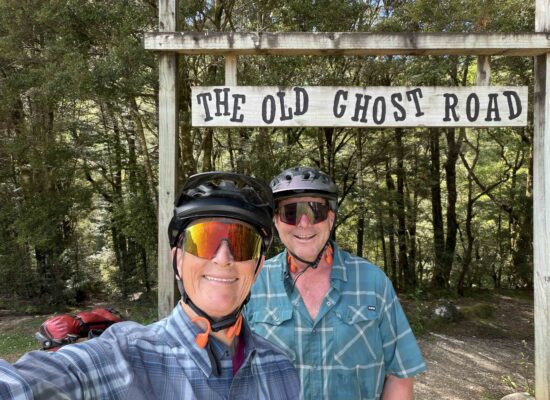
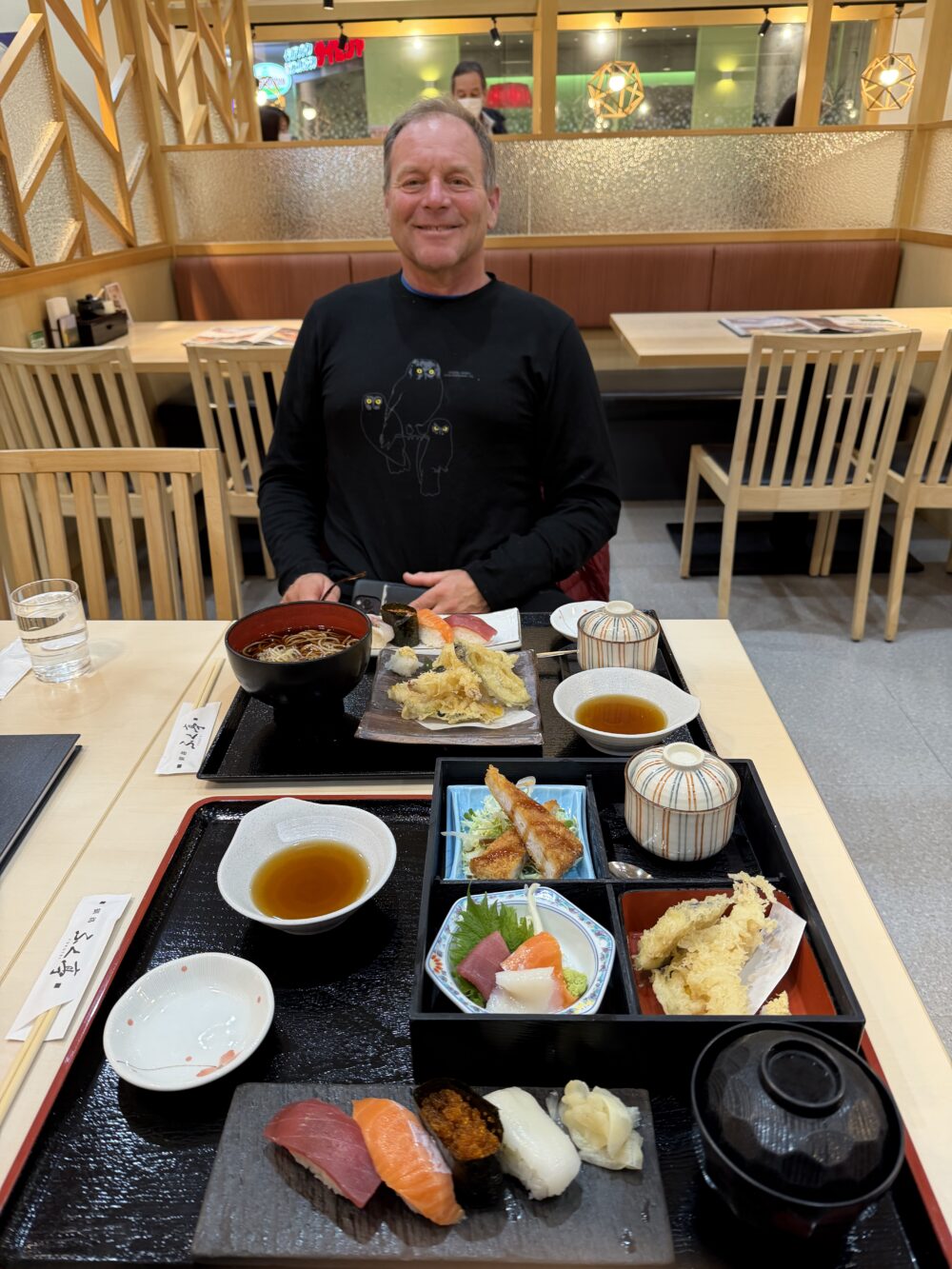
Chris contemplating our final meal in Hokkaido
The response of internet viewers to videos compared with still photos or written posts is phenomenal. It’s something I struggle with – I write a blog, because I think that’s a good way to communicate complex ideas. Hmmm…is that honest? I write a blog because I’m practised at writing and I enjoy writing. I haven’t done much investigation of what my consumers want.
In fact, all my evidence is consumers want videos. Every time I post a video it gets hundreds, or even thousands of views in a very short space of time. This far outweighs the interaction I see with my written posts. I posted a not very well lit video of Chris skiing deepish powder in Japan and, within 2 days, it had 10,000 views. Crazy. That’s the most interest there’s been for anything I have ever posted on the internet. And I didn’t even put a soundtrack with it.
Other evidence people love videos is the rise of mukbang. I read about the existence of mukbang in an article referring to how people use their time, including time on social media. The reference to mukbang watching was a throwaway line but it caught my attention because I had no idea what a mukbang was. So I went investigating…
Mukbang are online video broadcasts in which a host consumes food (often from popular fast-food restaurant chains) while interacting with their audience and/or reviewing the food. Mukbang originated in South Korea; the word is a portmanteau of the Korean words for eating – meongneum – and broadcast – bangsong. Mukbang have been popular since the mid-2010s – how did I miss this for so long? Mukbang may be precorded or streamed live and the livestream mukbang host chats with viewers.
Mukbang hosts generate revenue through donations or partnering with advertising networks. Mukbang is theorised to alleviate loneliness by creating a sense of companionship between socially isolated viewers through shared meal experiences. The format has spread beyond Korea (particularly in Asia) and the term is adopted in other types of eating shows.
While some people are making money out of mukbang (and I’d guess relatively few, compared to the numbers who hope they will make money), there’s plenty of criticism of mukbang for their promotion of unhealthy eating habits and effect on food waste. Many mukbang show the host consuming highly processed food. Mukbang watchers are also fascinated by the ability of hosts to remain thin after ingesting large amounts of food (in mukbang, as in other food shows, the attractiveness of the hosts is an important factor). To stay thin, some hosts chew food and spit it out (not shown online!), others eat the food over multiple sittings and edit video clips into a single stream. Streamers may show far more food than they actually eat, throwing the food out afterwards. Watching mukbang could quite likely distort people’s ideas about normal or healthy types and amounts of food to eat. A counter-behaviour is people watch mukbang when they are hungry to get the vicarious pleasure of eating without the calories.
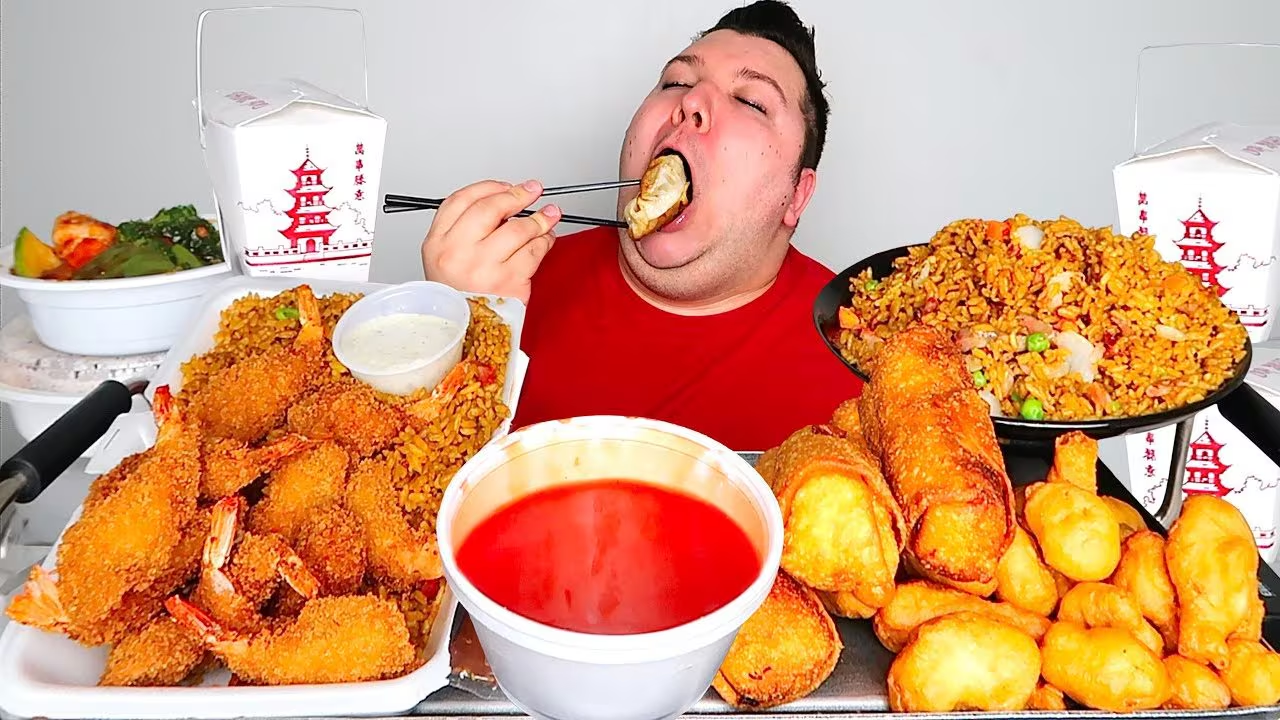
In reaction to the issues around mukbang, China banned streaming or sharing of mukbang in 2021 on the basis that it leads to food waste. In 2024, after the death of a Philippino mukbang vlogger from a stroke, the government proposed banning mukbang. After protests about freedom of expression, the government backpedalled to only require content creators to make videos based on the ‘Pingang Pinoy’ food guide, to promote healthier eating.
The more I learned about mukbang in my research, the less I liked the idea of it. Which says nothing other than that different people like different things. And possibly that the internet and social media show us how crazy human beings really are…have you heard about the movie Cannibal Mukbang?


Discover more from Jane Shearer
Subscribe to get the latest posts sent to your email.