
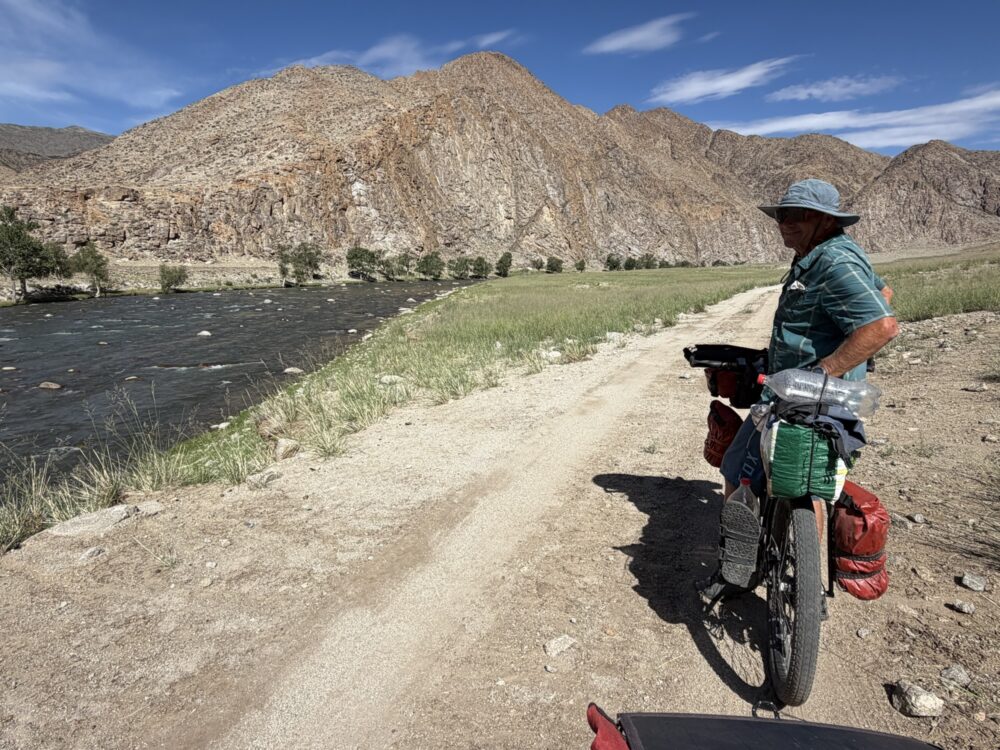
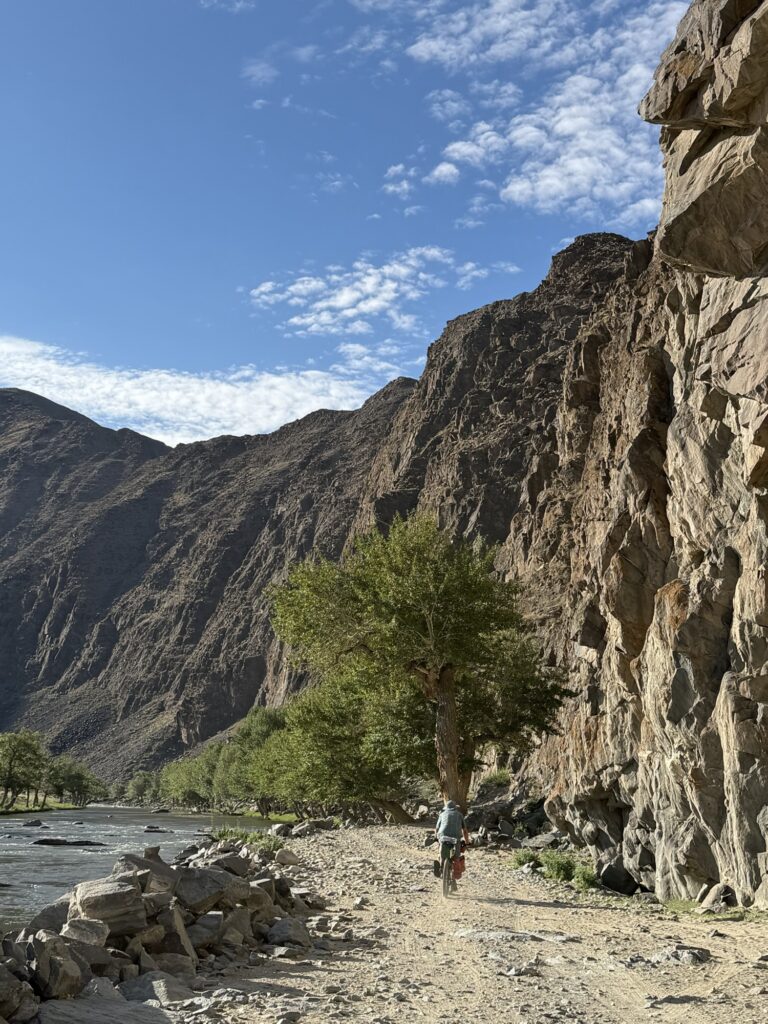
Chris cycling up the Bulgan River in the Mongolian Altai
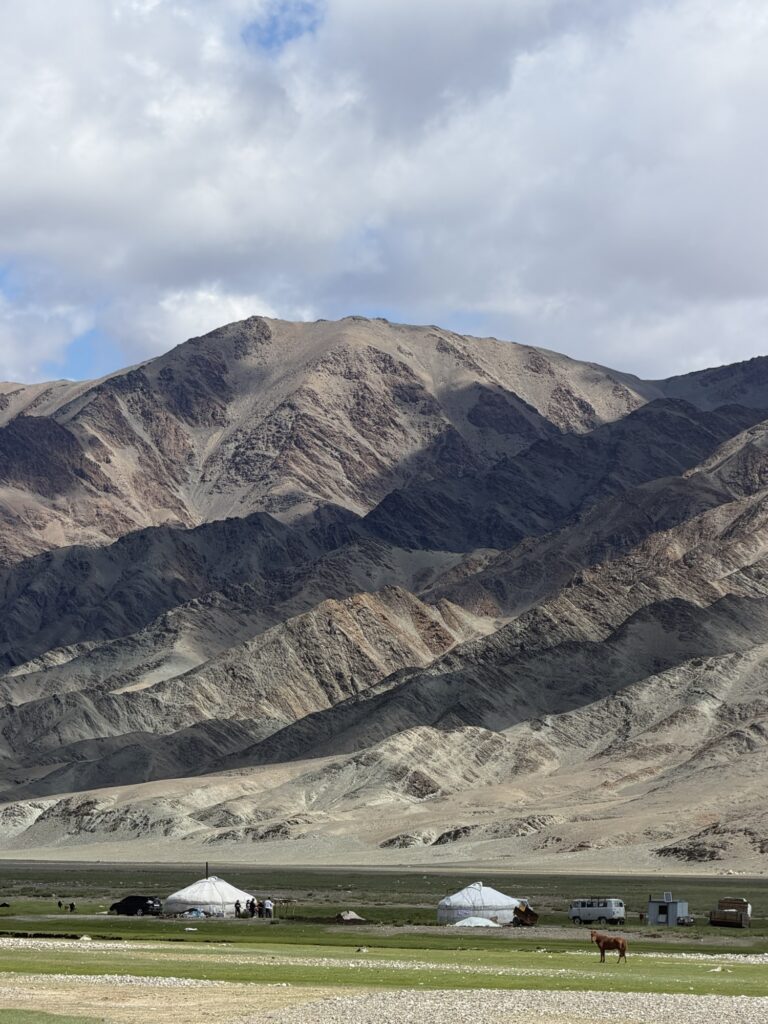
We are back in the mountains of Mongolia and it’s quiet. That’s something I remember from last year – the quiet and the stillness. It’s hard to find quiet places now and I think the volume of noise we are constantly surrounded by stops us listening. We close our auditory processing in the face of the overwhelm.
In the Mongolia Altay there are no aeroplanes or helicopters roaring and buzzing. Even the NZ back country gets a lot of aerial noise and it’s not till it’s gone (like during COVID) that you realise the quantity.
There’s not much road traffic noise in Mongolia, either. Today we have been passed by three Shineray motorbikes, a Russian jeep and a Russian van. We were cycling from 6am till 3pm. Where we live in Gibbston, we can hear the hum from the main road although we are over 2km away. Most places in the Wakatipu are never free of traffic noise.
Even the villages in Mongolia are pretty quiet. There’s no music playing and little traffic on the streets. No manufacturing plants. If there’s construction it is being done by hand. The odd dog barks.
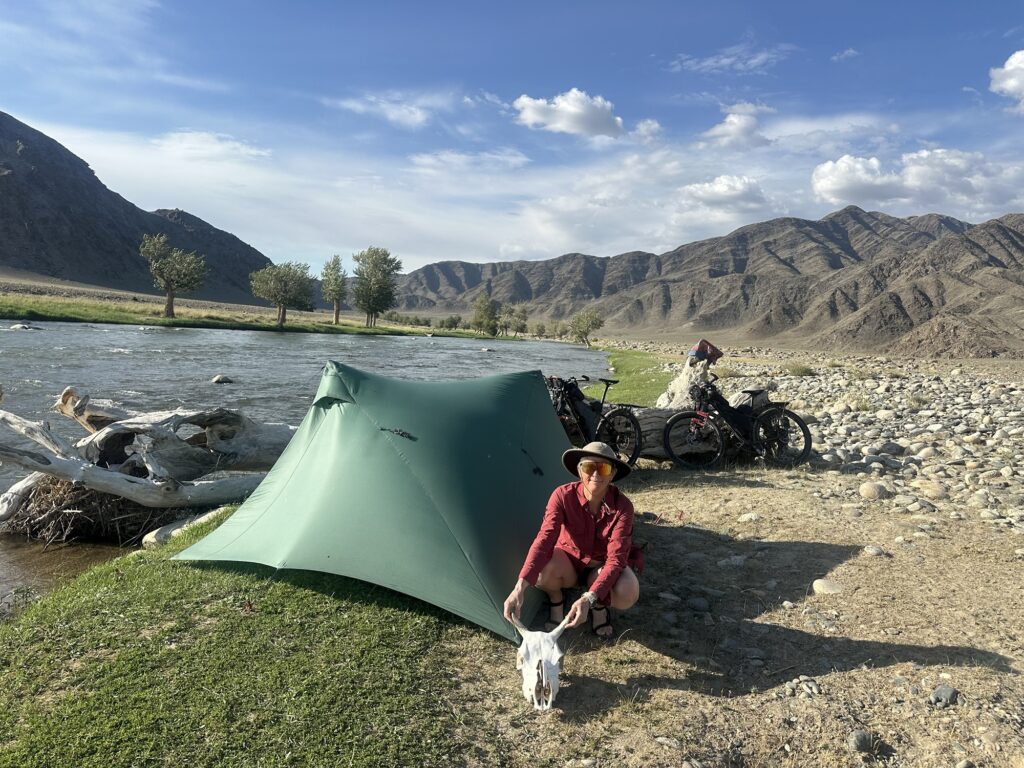
When we are camping we hear the river gurgling, wind in the trees and on the tent, bird calls of birds for which I don’t know the names apart from crows. When there’s stock, there’s quiet grass munching. Sometimes a yak grumbling – a cross between a moan and a snort. Or a sheep baaing.
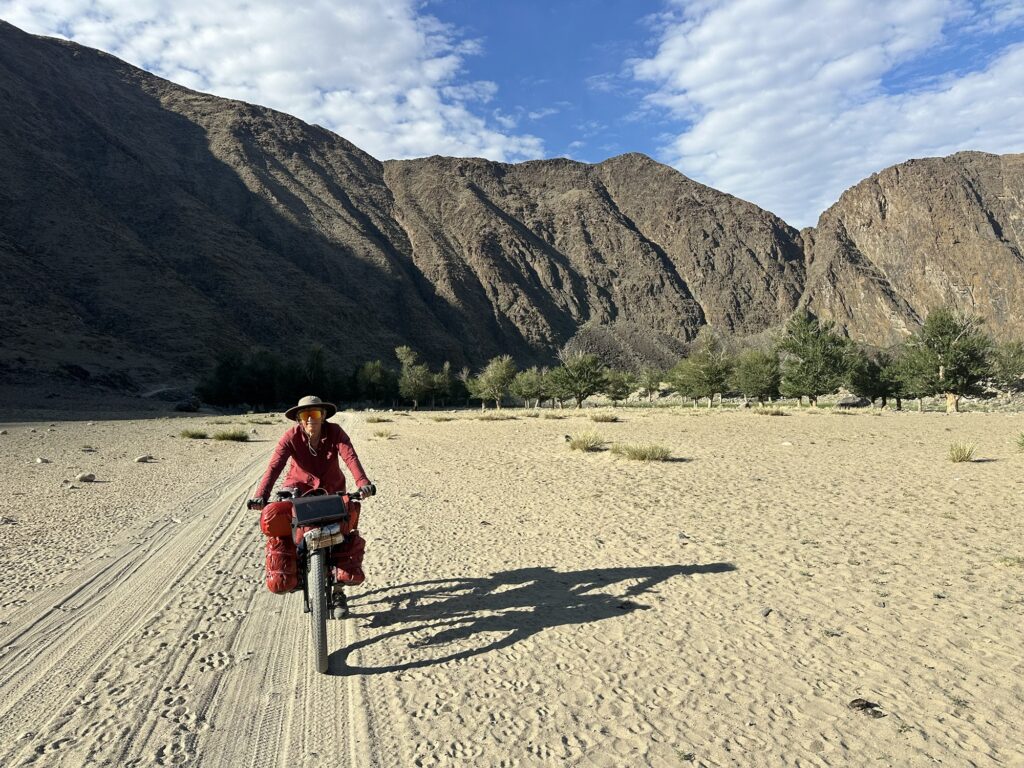
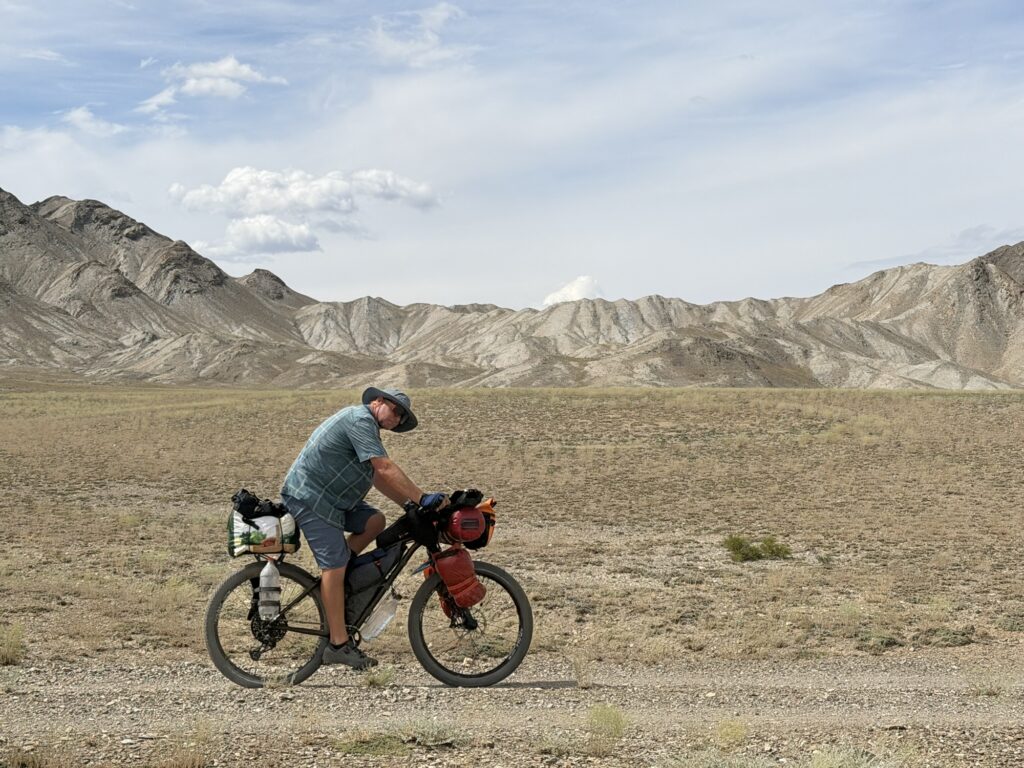
When we are cycling we hear the sounds of the river and wind, the crunching of our tyres on the uphill and whirring on the downhill. We get highly attuned to our bike sounds because they can warn of problems – is that a ticking a strap or bag touching the wheel or just a piece of grit on the disc touching the brake pad? The scrape of dirty derailleur cogs turning tells you it’s time to clean the drive train. If you don’t know the origin of a sound, you stop fast in case it’s something loose like your rack!
What you also listen for is the state of your body, as important as your bike. Western eating patterns and busy lives stop us hearing our bodies properly. Am I hungry? I need to keep fuelled. Do I have the weird stomach gripe that tells me I urgently need to drink a lot of water? What do I feel like eating? Sugar? Salt? Our bodies are engines that know their own state and inform the attentive listener.
I had a slightly upset stomach a couple of days ago (not uncommon on these sorts of trips) and my stomach demanded to be fed yoghurt and lots of bread. “This is ridiculous,” I thought as I chewed through the whole of a 40cm diameter plain naan bread. By the end of the day I felt better, though, so maybe my stomach knew what it was on about.
We talk and listen to each other. There are many hours in the day with few distractions other than turning the wheels, setting up/breaking down camp and cooking dinner. I wouldn’t claim we have particularly deep conversations but there’s time to share what you are experiencing, “Did you see the ducks in the river?” “Look at the orange glow on the cliff.” “Was that sign a picture of a cow or a sheep?” Regular mundane interactions that link people together and which drop out of the picture when there are too many inputs.
Having time and space to listen is a privilege and a pleasure. It reminds me I need to make that time and space when I’m back in busier places.
Discover more from Jane Shearer
Subscribe to get the latest posts sent to your email.



2 thoughts on “Listening”
Good on you two. Not fir me. I sm on an amazing cruise finished in 3 days.
After 10pm in my Swiss village it is vey quiet. No bird song ? Water water everywhere but not a drop on the mountsides !