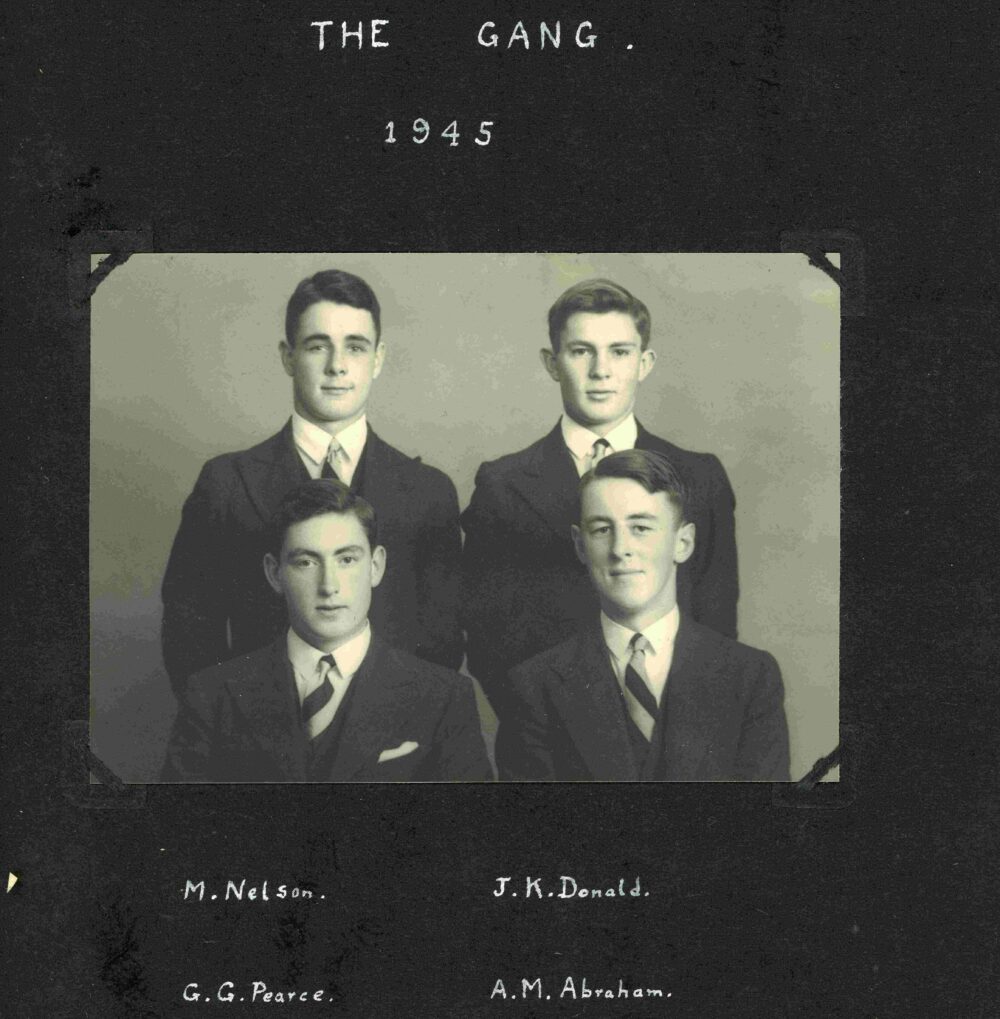
Michael Nelson, top left, is Chris’s father
There’s been a big fuss recently about social media posts showing Green Party and Te Pāti Māori MPs a with Mongrel Mob members. My first reaction was, sure, meet with the gangs but why allow it to go public?
Marama Davidson’s response to the fuss was that the Greens will engage with all communities. Te Pāti Māori (TPM) said they would meet with their people where and when their people wanted to meet. Labour pointed out gang members are part of our communities. National said the Greens and TPM are ‘prioritising’ gangs over victims.
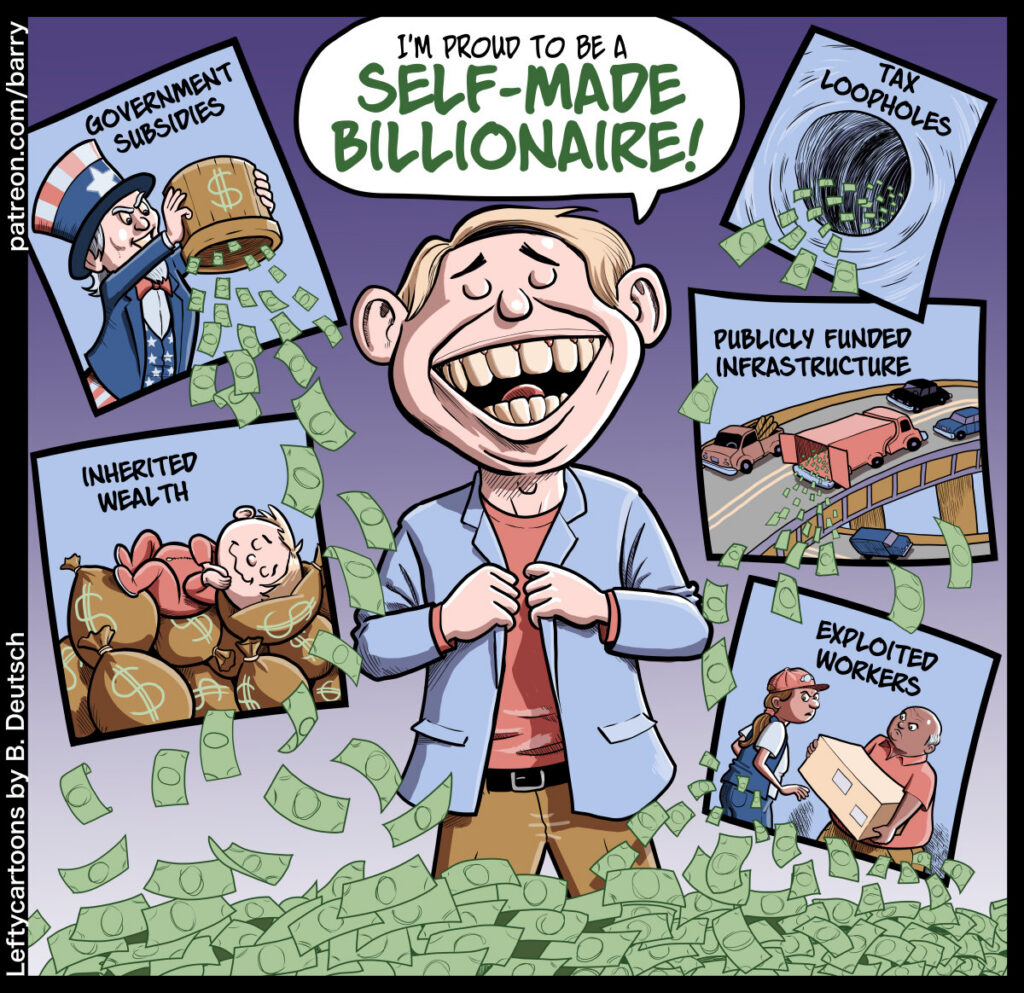
After I processed my negative reaction to the Mongrel Mob photo, I wondered whether I would react the same way to a picture of politicians meeting with a group of billionaires? Or a billionaire and their entourage? If not, how come? You don’t see the logic? Read on…
Why do I, and others, react negatively towards gangs? It’s obvious, isn’t it? Gangs perpetrate considerable violence in society; violence is baked into their social structure. Gangs traffic drugs and are the main conduit into NZ for harmful drugs such as methamphetamine. Gangs have little respect for the rules and structures of society; they almost deliberately exist to sit outside a country’s legal framework. As a result, I’m scared of gangs because their members cause me physical harm or someone fuelled by their drugs might hurt me or steal from me.
Are all gang members equally likely to harm me? I have no idea, because I’ve never spent any time with gangs. In fact, I know little about them. I know more about very rich people than I know about gangs.
And why should I be scared of billionaires? Billionaires might not cause me immediate physical harm but their scale of influence in our society and worldwide means they have more power over the future of this country, and our planet, then any gang is likely to have, and far more than any individual gang member. Interestingly, white collar crime is estimated to cost NZ more than street crime, although it’s street crime most people are scared about. According to the Beehive, white collar crime >$10B every year, while gang crimes cost $1.2-2.2B.
Of course, I’m not saying billionaires are necessarily likely to commit crimes. They might e.g. President Trump, Silvio Berlusconi, Vladimir Putin, Sam Bankman-Fried (who engineered the rise and collapse of FTX), Raj Rajaratnam (hedge fund manager convicted of insider trading). But billionaires can have massive negative impacts on society which are not currently considered crimes. Think of Elon Musk, Jeff Bezos, or Mark Zuckerberg, pushing their agenda of data centres at huge cost to the environment where the centres are built and to the parts of the planet where minerals are mined to create data centre infrastructure (including rare earth elements and lithium).
Societies are skewed in how they rank the ‘badness’ of different types of crime, or impactful behaviour. Despite its high price, we tend to downplay white collar crime, where people’s finances and livelihoods are affected, because the effects of the crime are spread across multiple people so we don’t see the impact being as great as when someone is knifed in a supermarket. White-collar crime is often attributed to an organisation, rather than an individual, abstracting the crime yet another level away from person against person, to be about a corporation against multiple individuals. We struggle to feel aggrieved about something so vague and invisible.
In elections, if a party says it’s going to be ‘tough on crime’ you can pretty much bet it’s not being tough on white collar crime. When I looked at policies for the upcoming election:
- NZ First will bring in tougher sentences for ‘serious’ crime, which appears to mean violent crime.
- National is promising tougher sentences for sexual offending.
- Labour will introduce a corporate homicide offence.
- ACT will spend $2 million to buy and install 20 relocatable noise cameras to crack down on noisy vehicles and hike fines for nuisance drivers (this is barely a ‘crime’ policy) and will also stop courts from considering Māori tikanga in the procedures.
White collar crime is nowhere to be seen.
The nature of what society considers as criminal, or more serious criminality, is a big topic in criminology. It’s well recorded how societies thinks young males, and young males with dark skins, perpetrate the most and worst crime. We think this because it’s the societally impactful actions of this group of people we define as crime and as the worst crime. Crime is not an absolute, it’s a legal definition.
On the theme of crime, Dr Fairleigh Gilmour, a criminology lecturer at Otago University, has created a programme where students go into prisons and both teach the prisoners and are taught by them. She found her criminology students knew nothing about prisons or prisoners, despite wanting to study criminology. None of their friends or family members were in prison. And she found education is the most likely way for a prisoner to escape the unvirtuous circle where being in prison increases the chances of returning to prison. When you combine students learning about prisoners and prisoners learning and learning how to teach, that’s got to be a societal positive.
I clearly remember my exposure to the prison system as an undergraduate student. I was a debater and there was a tradition for debating teams to visit prisons and debate with prisoners. We regularly went to Paparua Prison near Christchurch. When in Auckland, I debated at the Paremoremo high security prison. What was the most significant thing I learned? That prisoners didn’t seem so different from me. Not surprising at all. But very hard to fully take on board without exposure.
Back to the billionaires. Why should I be scared by pictures of politicians meeting billionaires? Because of the influence billionaires are likely to have on politicians. Influencing politicians to see the world the same way as billionaires and to enact legislation that benefits billionaires. In simple terms, money talks. Very rich people can afford to donate money to politicians and it’s hard to deny that if someone gives you money you want to keep them on your side. The Democracy Project calculated that, since 1996, $9 million has been donated to NZ parties and candidates by the 37 most wealthy people/families in the country. Eighty percent of that has been donated to right wing parties.
On reflection, however, I should probably be most scared by the meetings between politicians and billionaires where no pictures are taken…

Discover more from Jane Shearer
Subscribe to get the latest posts sent to your email.