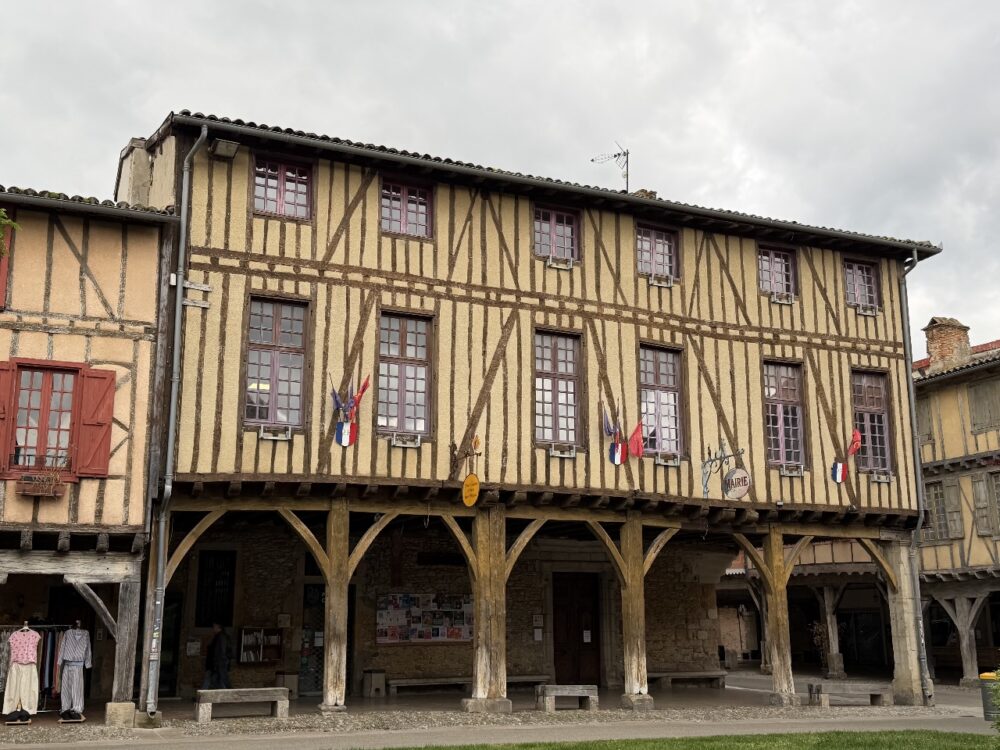
Mairie (town hall) in Mirepoix, southeastern France
While cycling through southern France, Chris and I have discussed why we consider the villages and buildings here are so beautiful. Stone farmhouses with painted shutters. Village with narrow streets lined with three story terrace housing, churches with spires, parks with huge plane trees. Pedalling along I think, ‘So pretty.’ Then I think, ‘I would not like to live in these houses at all. They have tiny windows and frequently none are south facing; they’d be dark and cold. The rooms are small and kitchens and living areas are separate little spaces. In the villages, the houses face each other and all the windows are curtained, while I like my windows large with views to the natural environment, not the built environment.’
How have I ended up with such a mental disconnect? That houses I like the look of are not the ones I want to live in? Our ideas of beauty, of course, are strongly culturally influenced. I’ve had decades of western influence showing me pictures of buildings labelled as ‘beautiful’. However, the concept of old buildings being beautiful is multi-cultural; in most countries ‘old’ and ‘beautiful’ are synonymous.
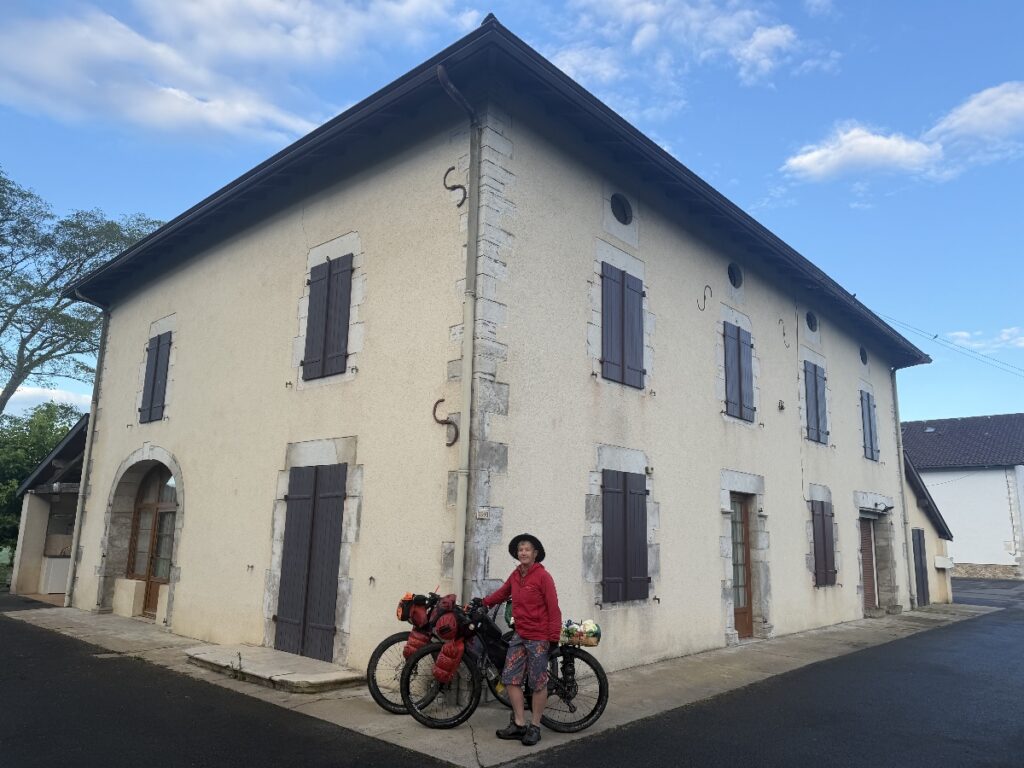
Jane beside a French farmhouse
The sense of age is one of the reasons Chris and I came up with when thinking about the beauty of French villages. There’s something comforting about a building that has lasted for 500 years. It might be particularly appealing for New Zealanders, where our Building Code only requires 50 years of life for building materials at maximum and our oldest building is just over 200 years old.
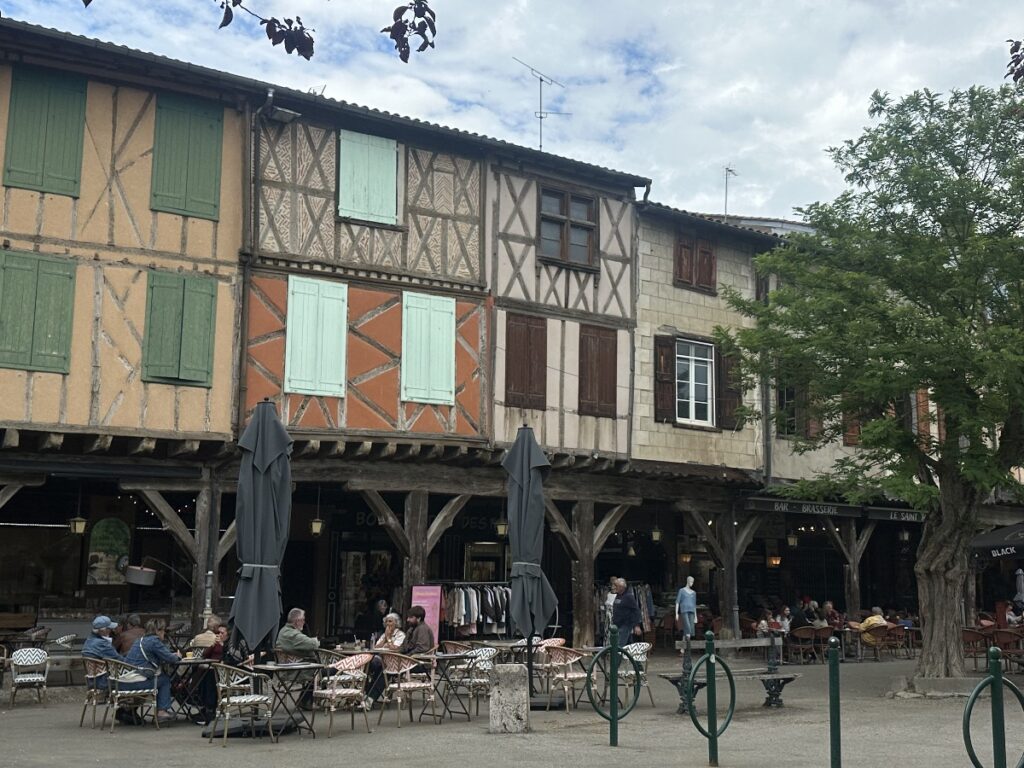
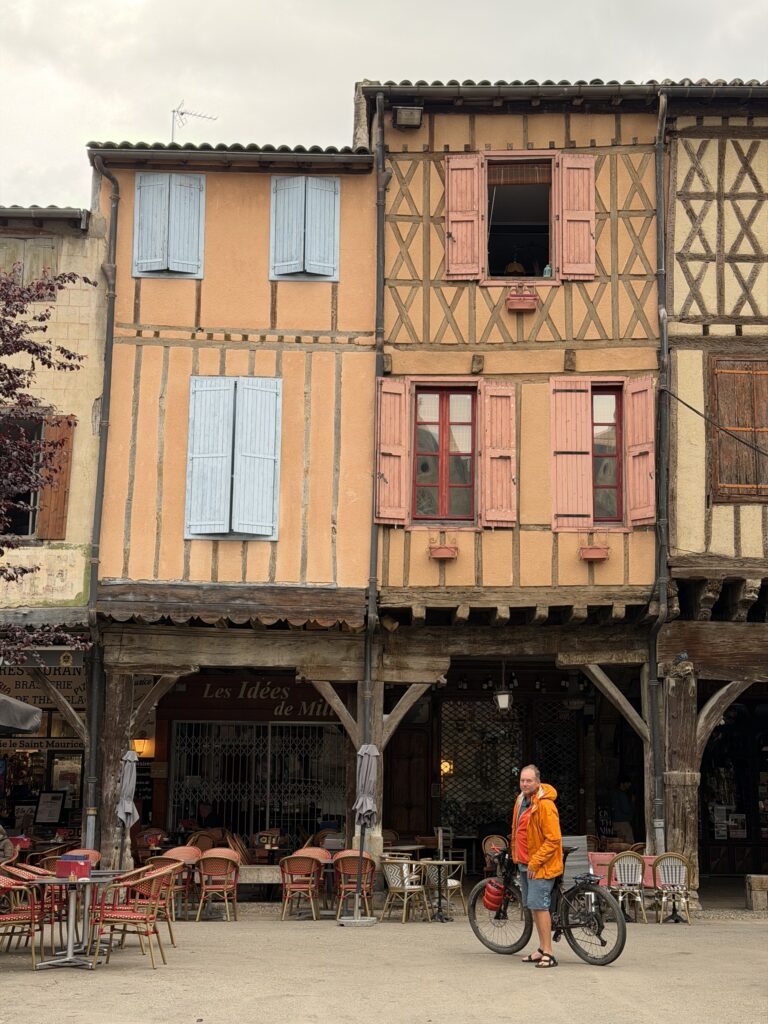
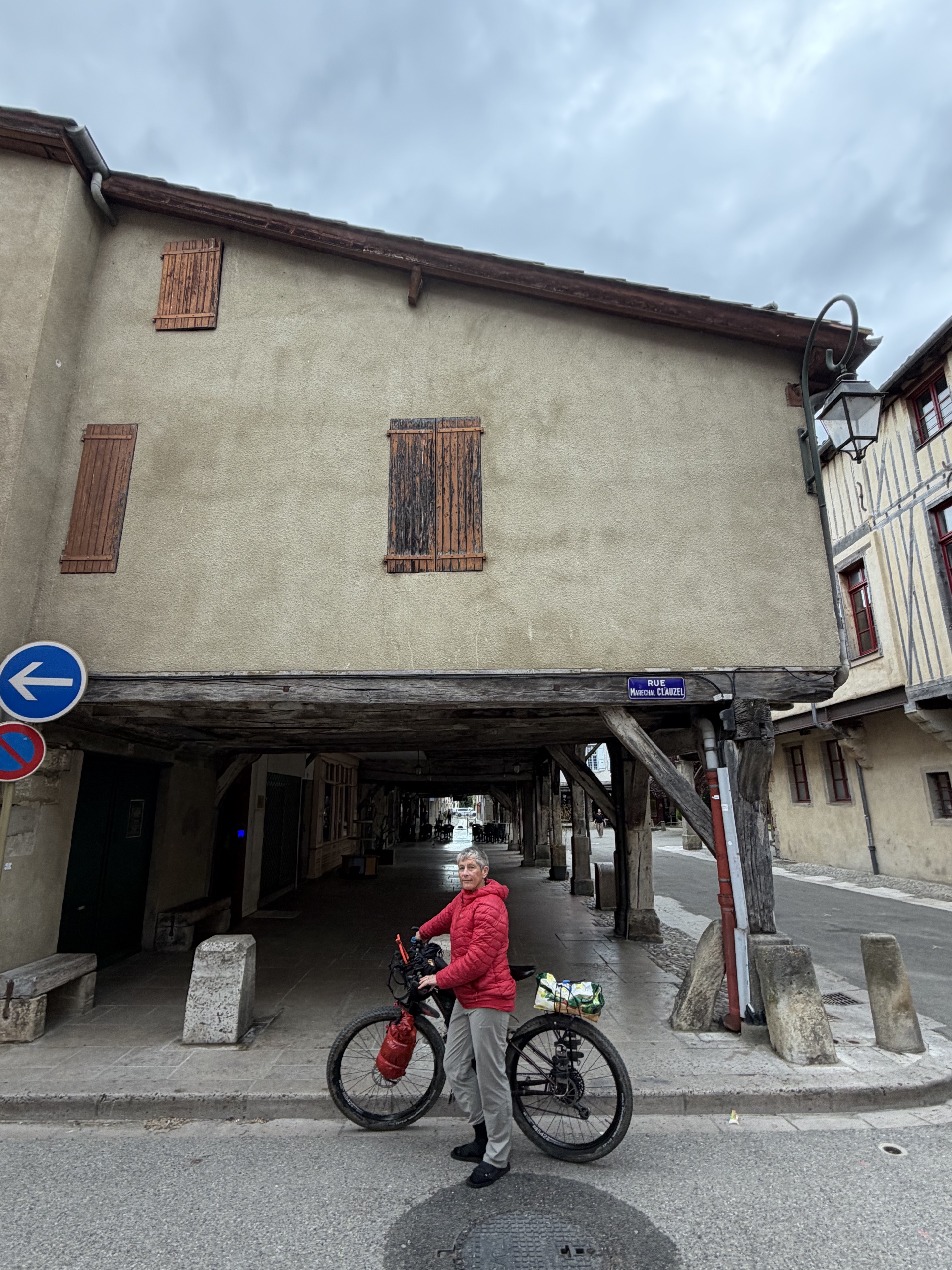
Simple, natural materials was another reason we like these buildings. Stone and wood are minimally manufactured and both feel closely linked to the natural environment. In the case of old buildings, it’s likely they are from the locality as people built with whatever was nearby, rather than transporting heavy building materials. Plaster is also likely to be made from local inputs.
Mirepoix medieval buildings. In New Zealand, we don’t think of wood as such a long lasting product but these are 600 to 800 years old.
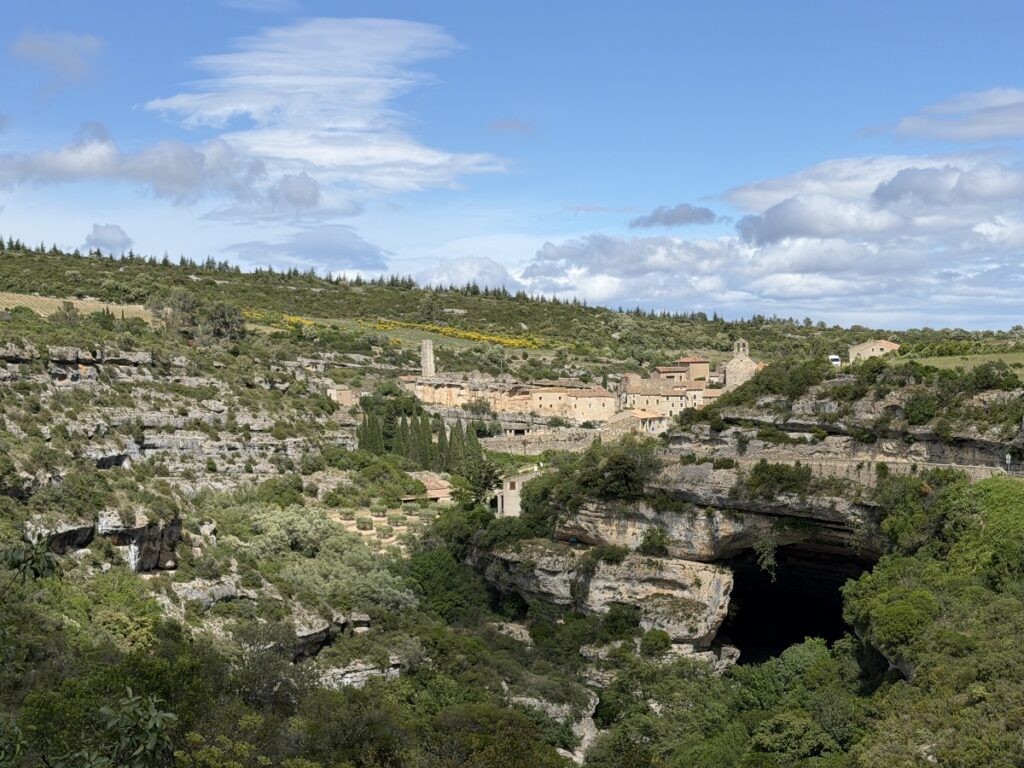
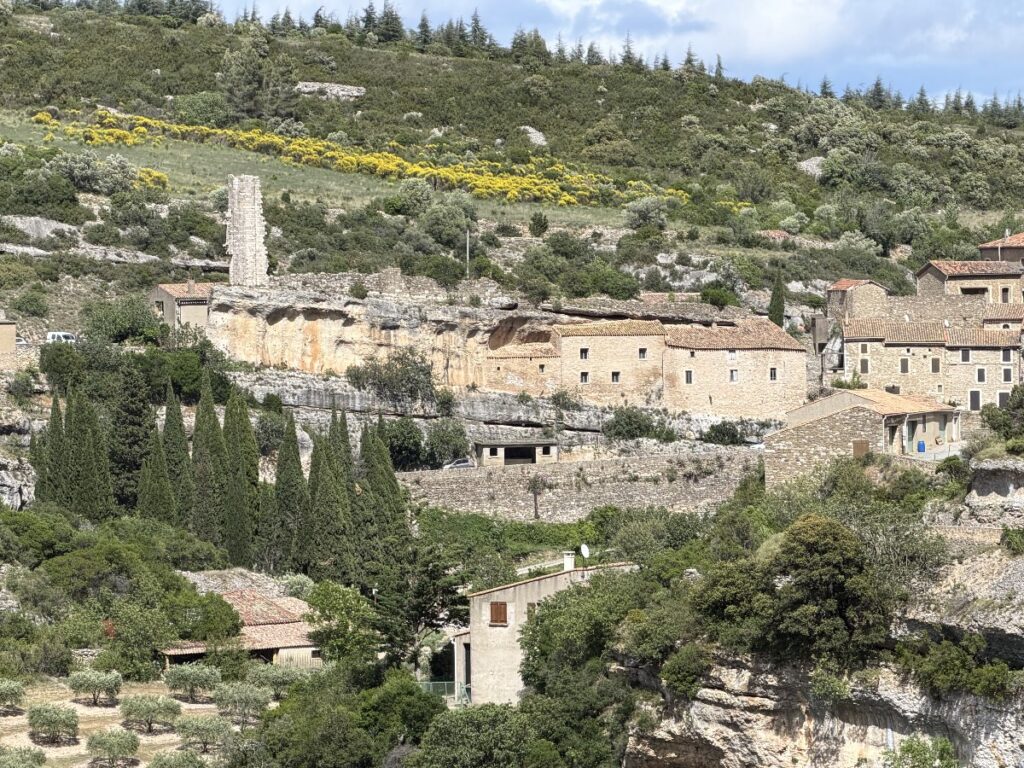
A related aspect of built beauty in many countries, is where they are made of materials from the landscape so blend into their surroundings. Minerve is an example – a medieval town made from the surrounding limestone.
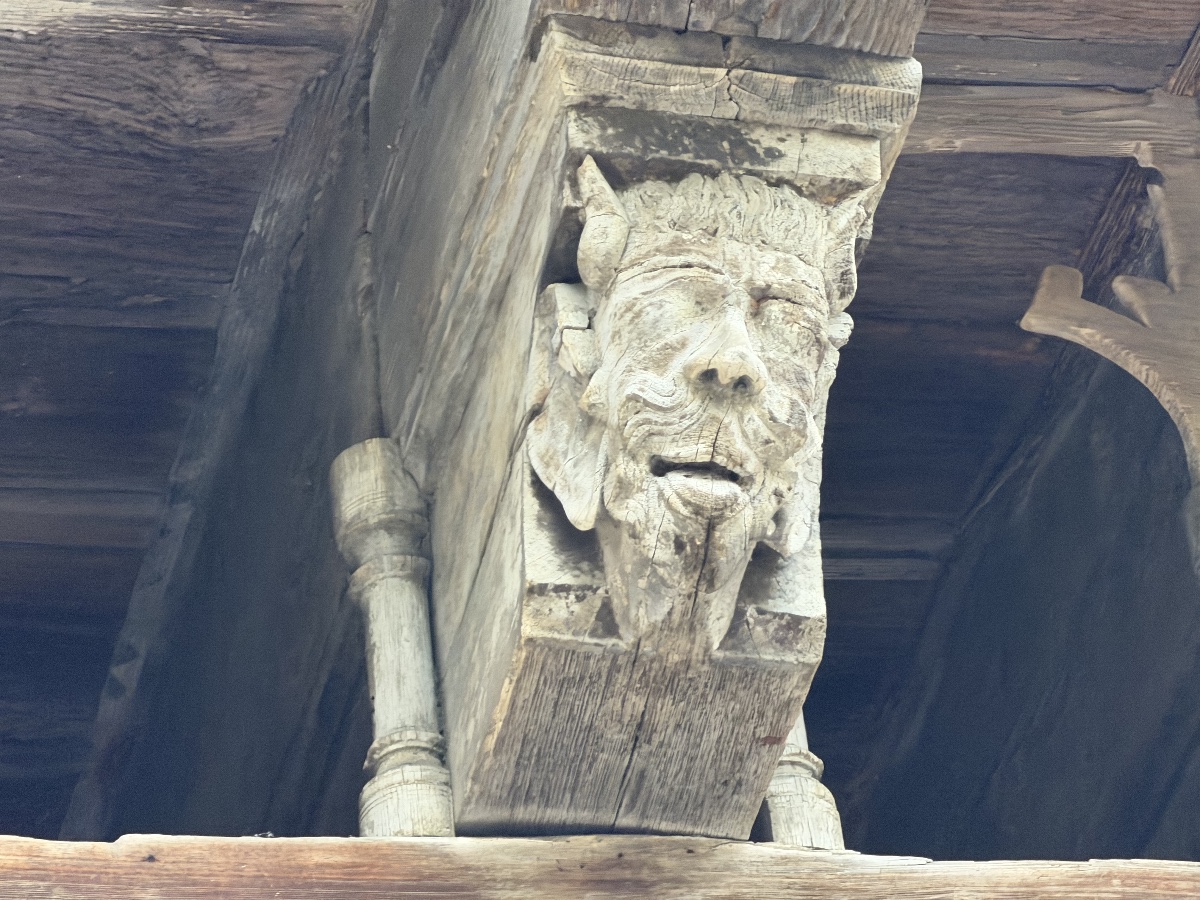
Another aspect of beauty is individual, time-consuming, architectural details. I wrote about these in Mad Seagull Lady. Cathedrals, including this one in Mirepoix, are full of detail at every level, down to hand-painted fleur de lis on the columns and all the tiny pieces in stained glass windows. Some of the support beams in the wooden buildings in Mirepoix’s square end in medieval gargoyles. Small details bring buildings down to human size – taking people from awe at the whole to relational with the specifics.
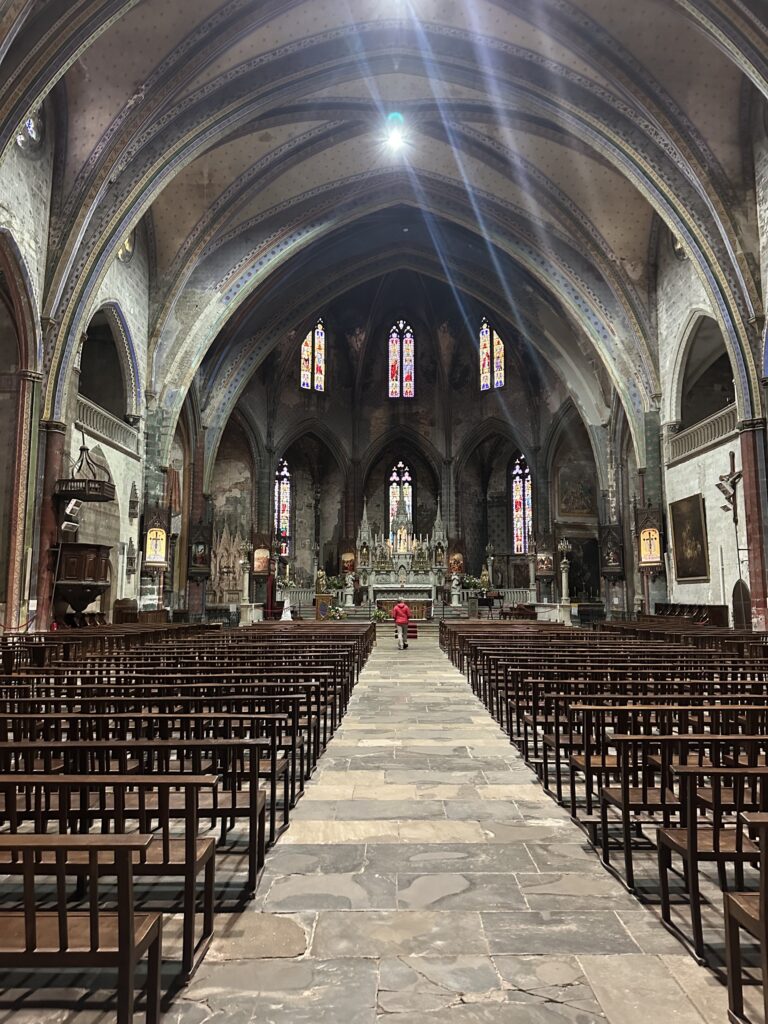
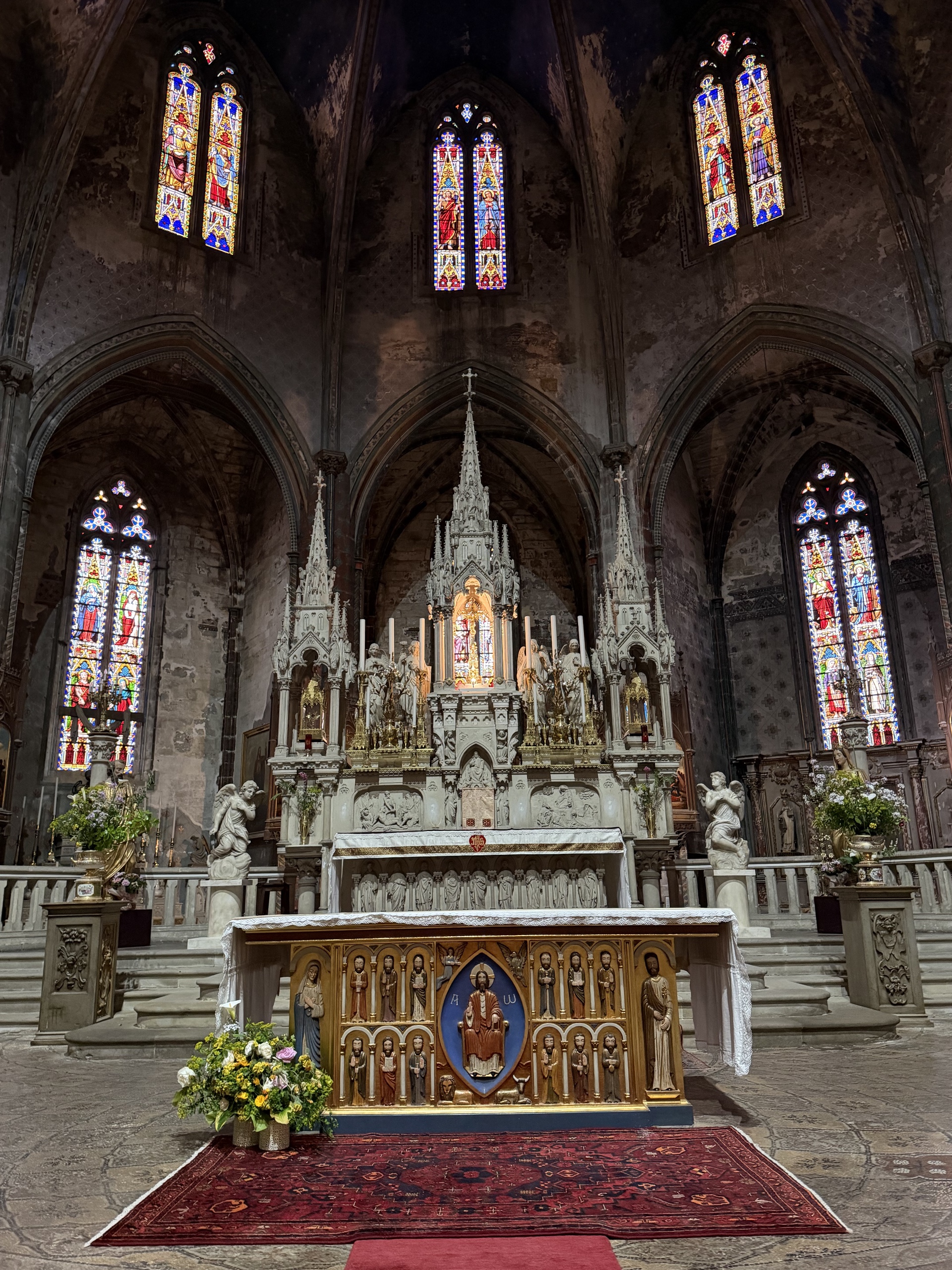
Some shapes also feel particularly beautiful. The curve of cathedral arches – structures that feel delicate and balanced but are supported by solid columns. Symmetrical structures appeal to the human eye.
Light is another part of beauty and cathedrals have that one down, letting shafts of light through and playing with colour in their windows. The shutters on Mirepoix buildings also draw you in with their muted, but varied colours.
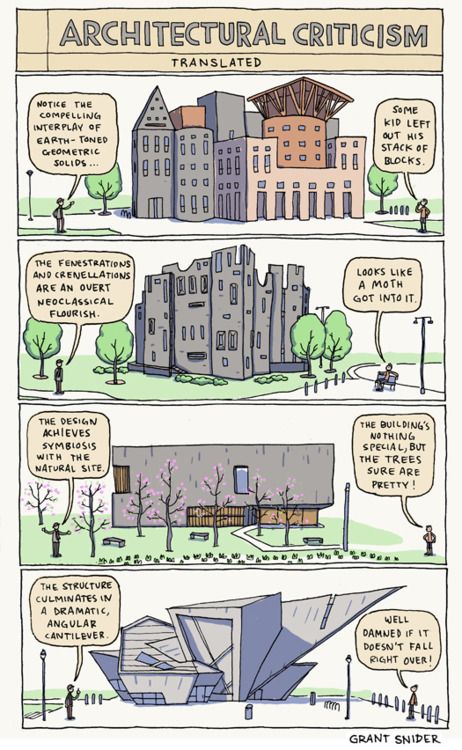
Many philosophers have written about the nature of beauty and, funnily enough, there is no pinning it down. Beauty is a feeling rather than an absolute. A Trump Tower, anyone? It’s beautifully shiny but how do you feel about it?
Trump has promised not to do this to Greenland…


Discover more from Jane Shearer
Subscribe to get the latest posts sent to your email.