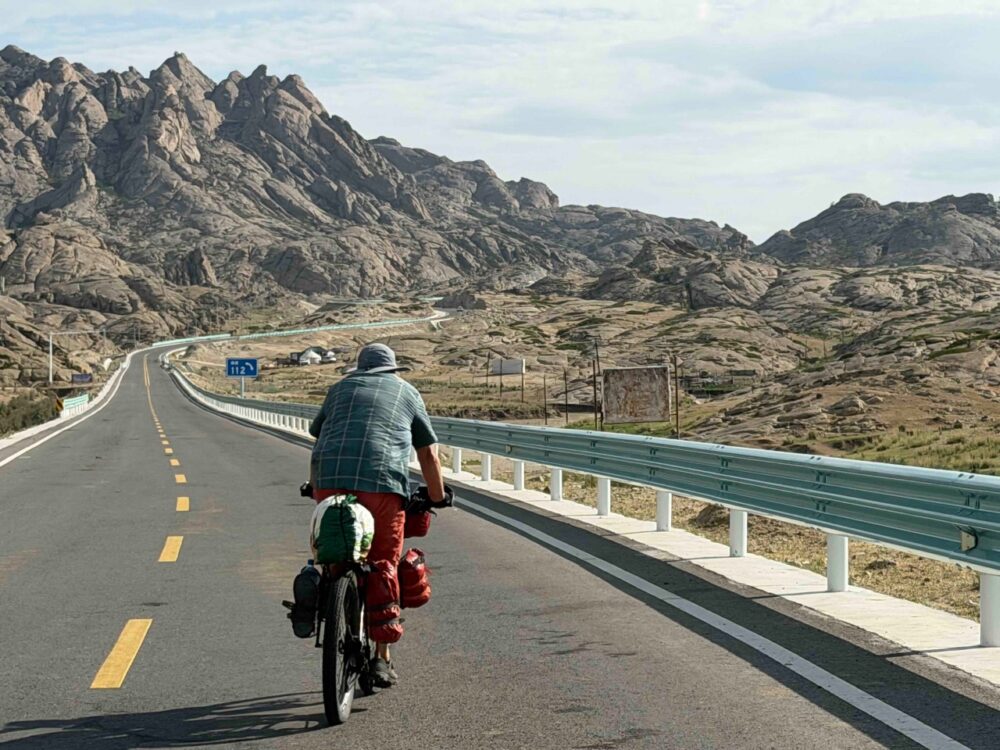
Chris cycling in the spectacular granite mountains on highway G331 between Altay and Qinghe (more pics of our trip here)
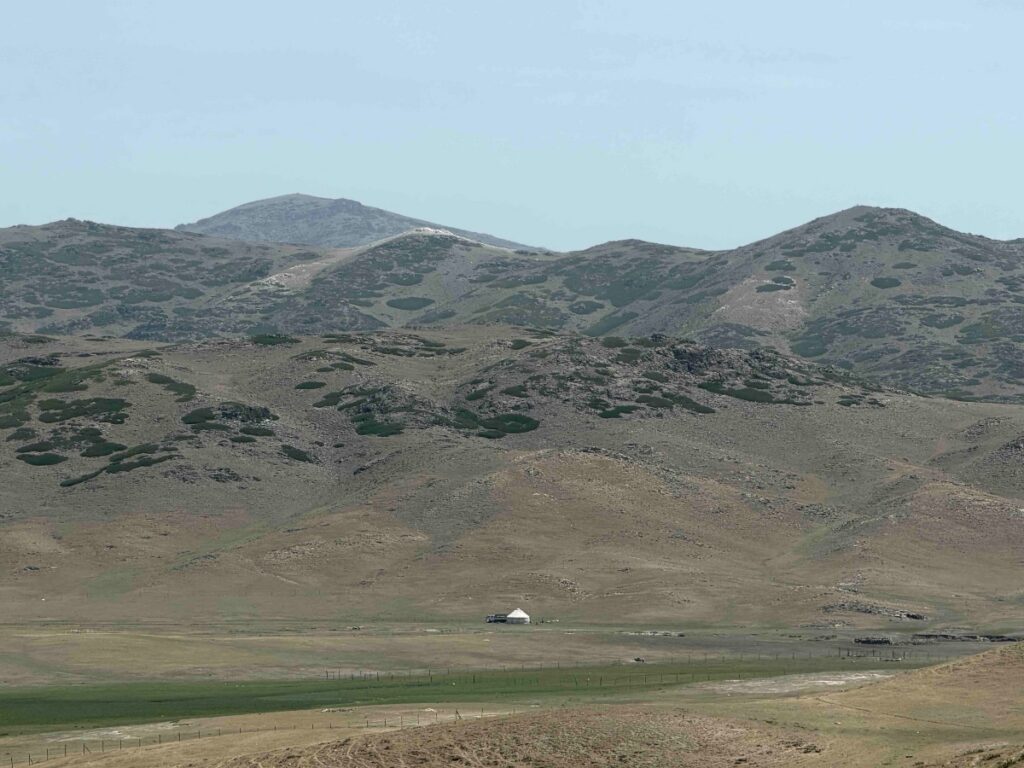
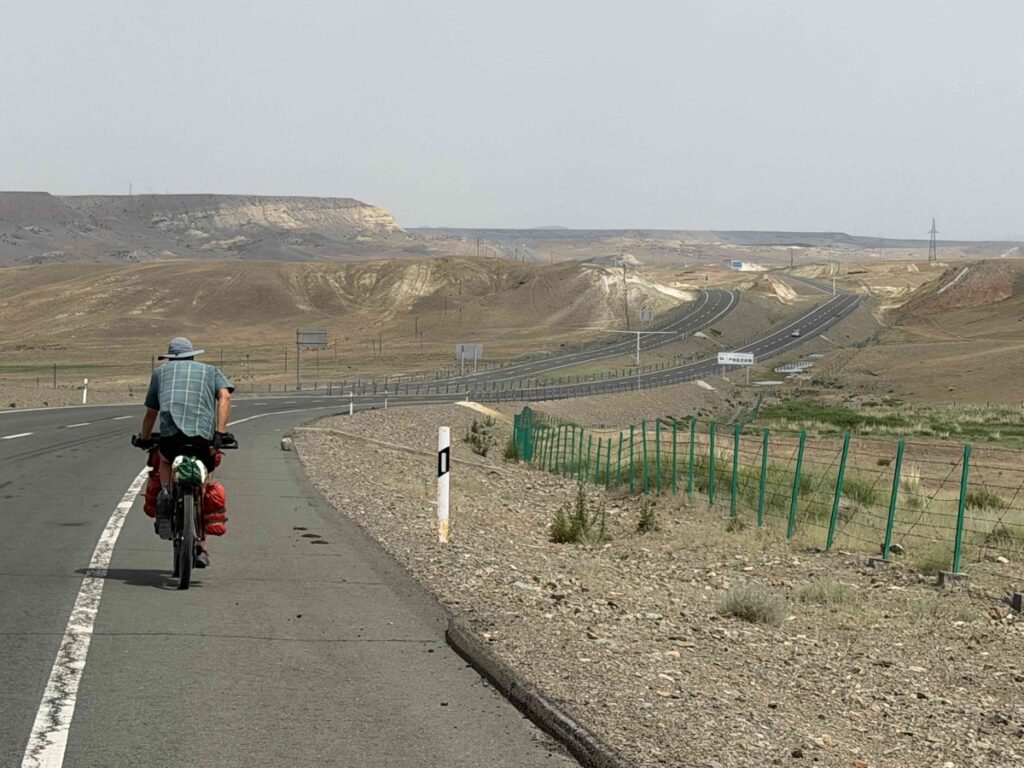
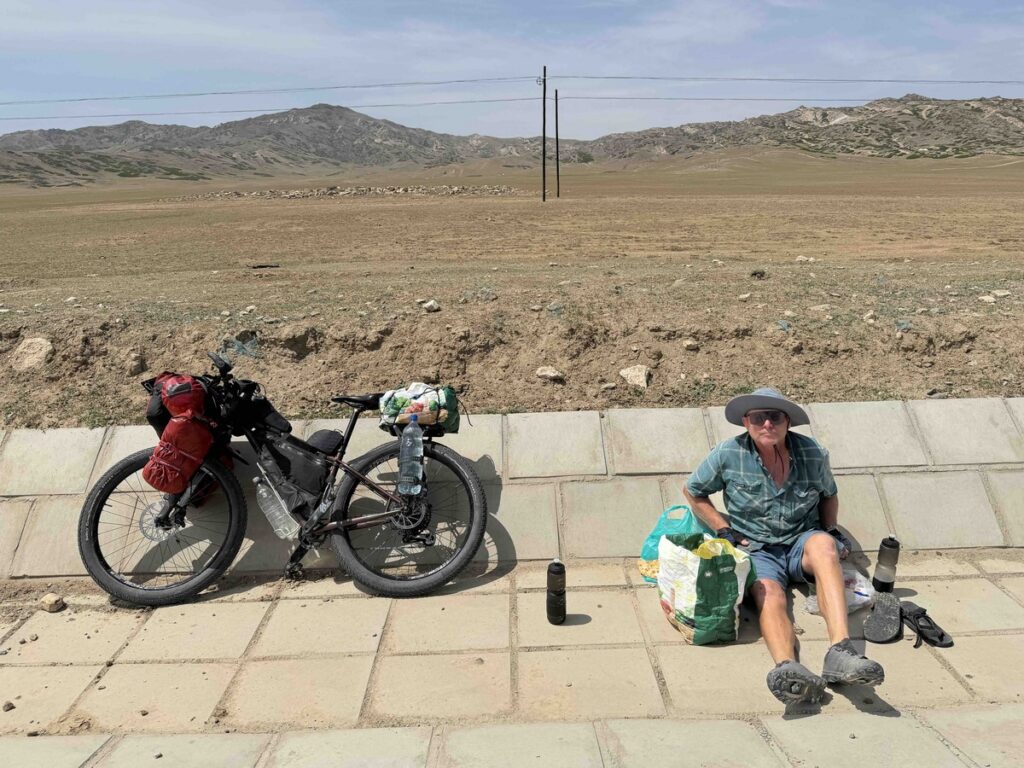
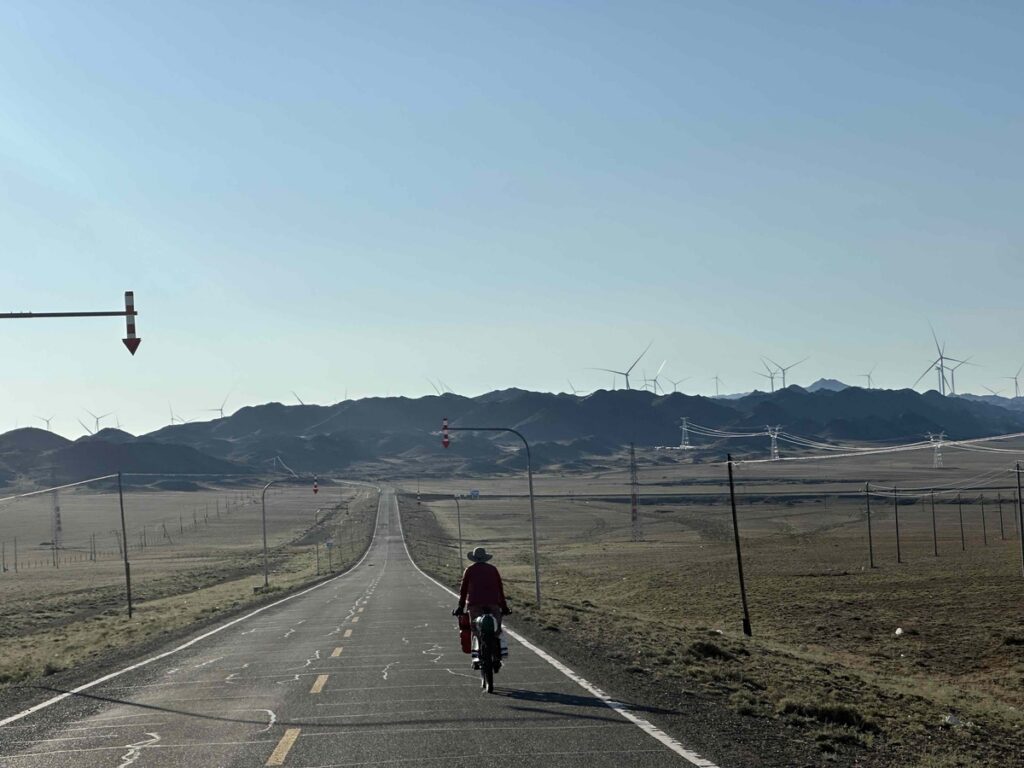
Yesterday it was 36C in the shade midafternoon at 1000m elevation. It was still 25C when we cycled into the pre-dawn light at 5am – that was the cool of the morning! We hadn’t slept much as the sun didn’t go down till after 10pm and was shining on our tent, heating it up. While we weren’t cycling in Europe for the recent heat dome (thank goodness we missed that!), we are now in a place where extreme temperatures are the long term norm, not the exception. It’s hard to convey heat in pictures other than showing the lack of anything that creates shade.
I remember first coming to Xinjiang in 2011 and being impressed by a climate which reaches 40C in summer and -40C in winter. How have humans survived here? And clearly they have survived for millennia – the Altay museum documents 45,000 years of human habitation in the region.
Part of the answer is being nomadic. To avoid temperature extremes, families and their herds move up valley in summer and down valley in winter. Another part of the answer is the right sort of dwelling. The nomads live in gers (yurts) which don’t have windows. No windows to let heat out in winter. No windows to let heat in in summer. However, that doesn’t mean a pleasant inside temperature year round. A single layer of felt heated by a stove drip fed with dried cow dung doesn’t keep you warm. It keeps you alive. And it doesn’t cool you down or warm you up when you go out to tend your stock.
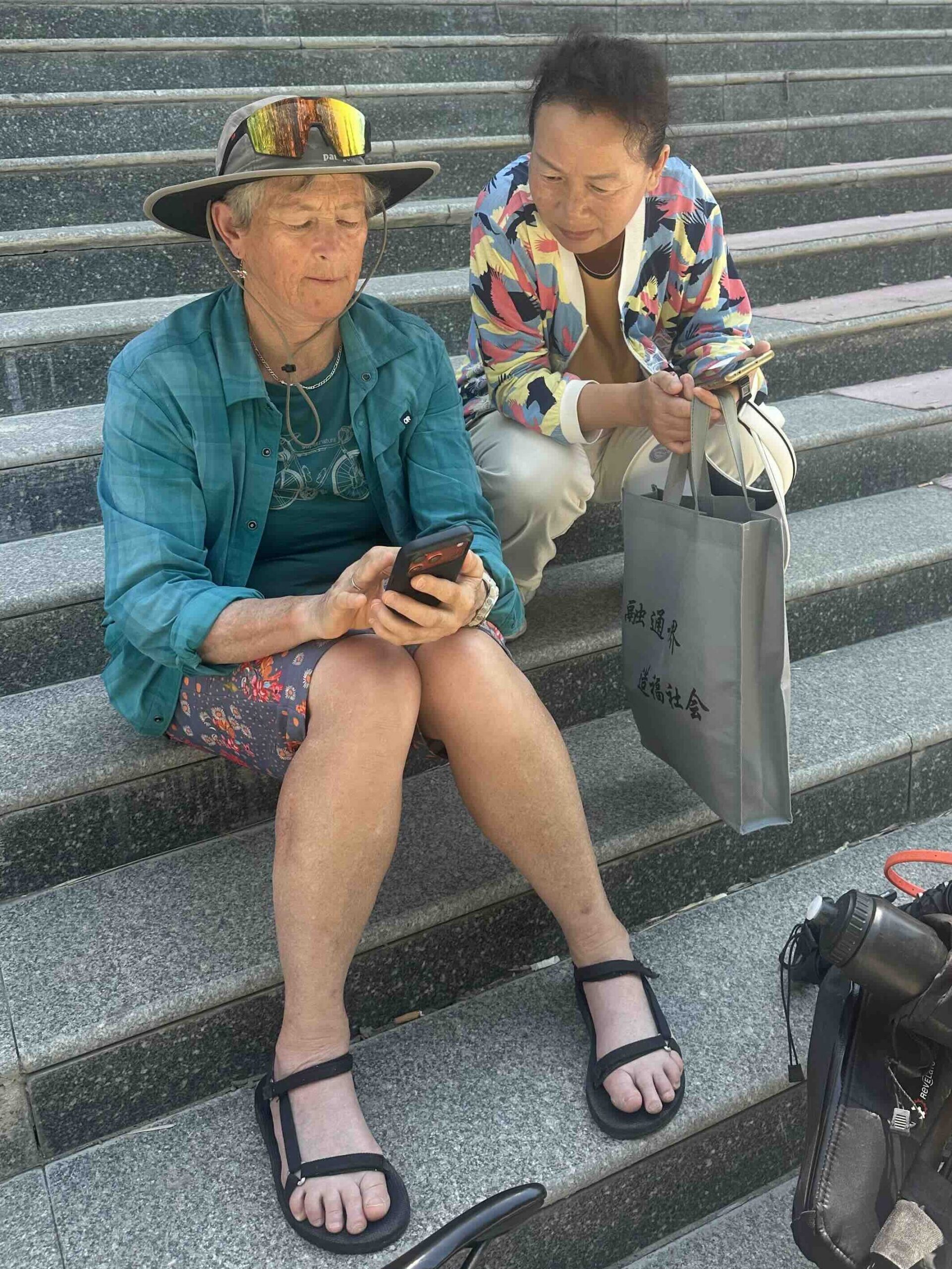
People also dress for the conditions. They cover their skin year round – it’s as important to keep sun off your skin to stay cool as it is to insulate your body for warmth in winter. A woman in Altay told us off roundly for wearing shorts rather than trousers and sandals rather than shoes. She pointed at the forecast temperature on her phone and shook her head at us.
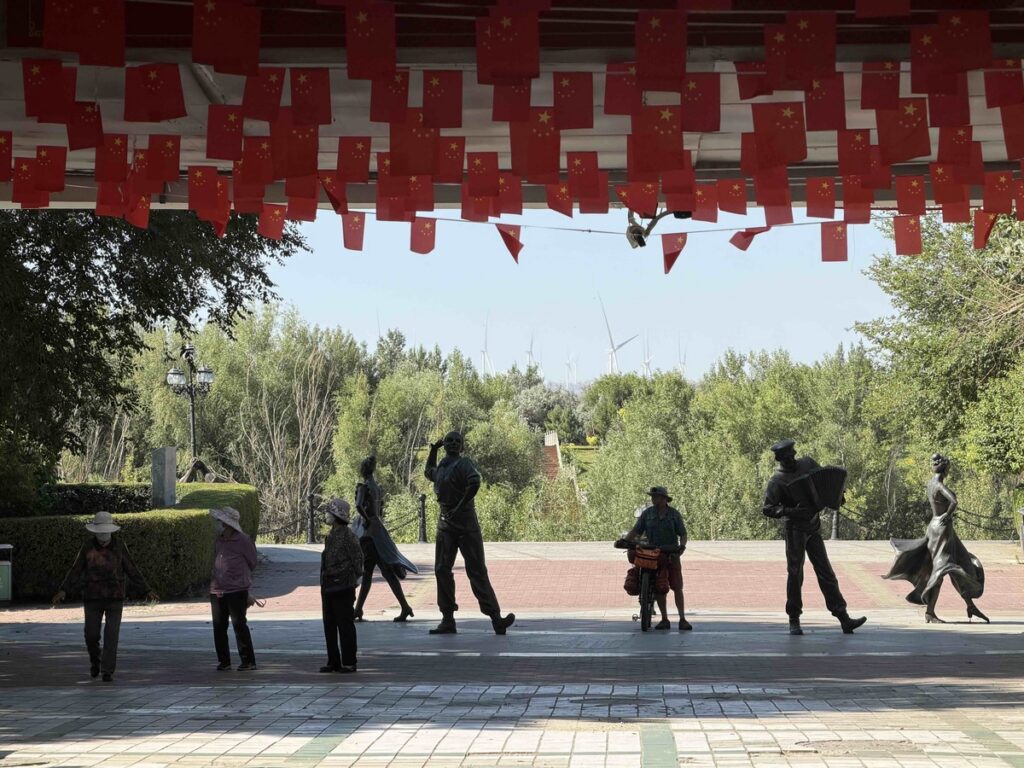
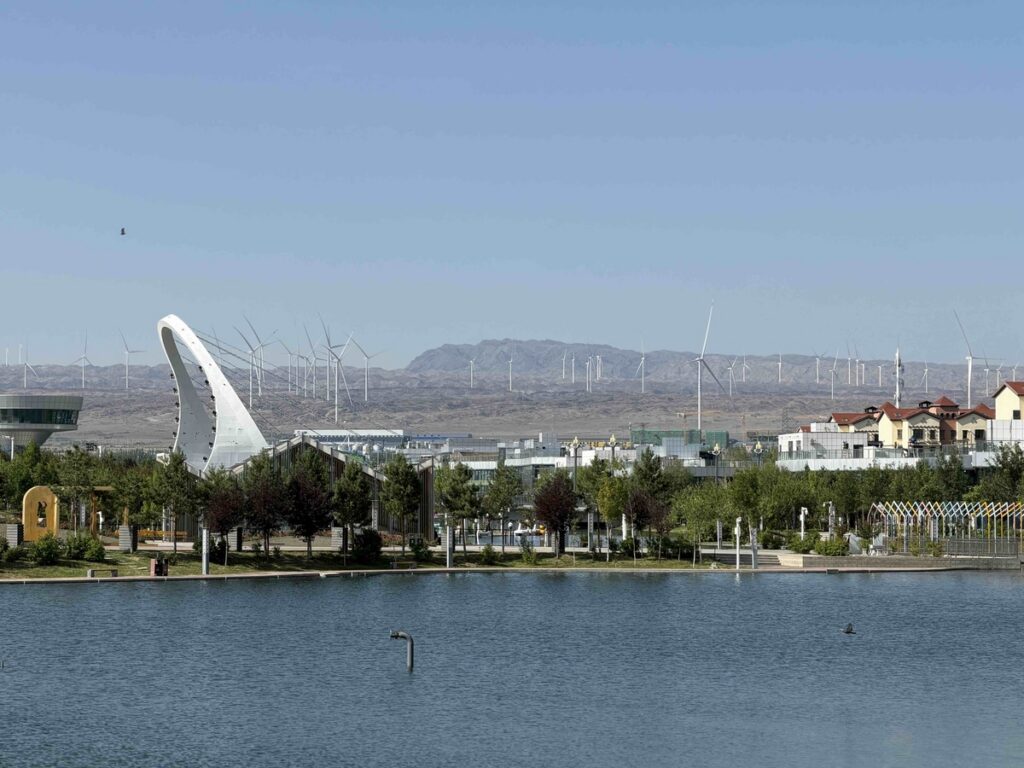
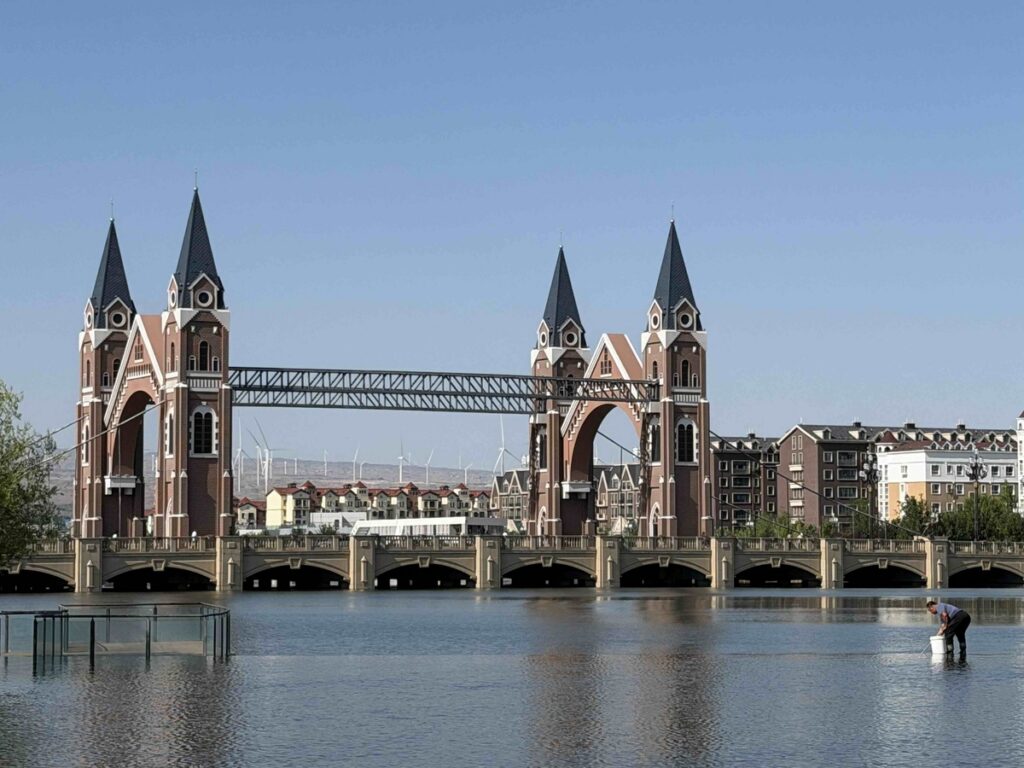
Running water helps too. Gers are often next to a stream and cities are beside sizeable rivers which they make into features. You can feel the cool air off the water – we are camping beside rivers. The cities here also maximise trees. Poplars are planted everywhere because they are fast growing trees that need relatively little moisture. However, there’s also major watering to keep grass green in cities. It’s also noticeable how much cooler vegetation is than bare rock when you are cycling by.
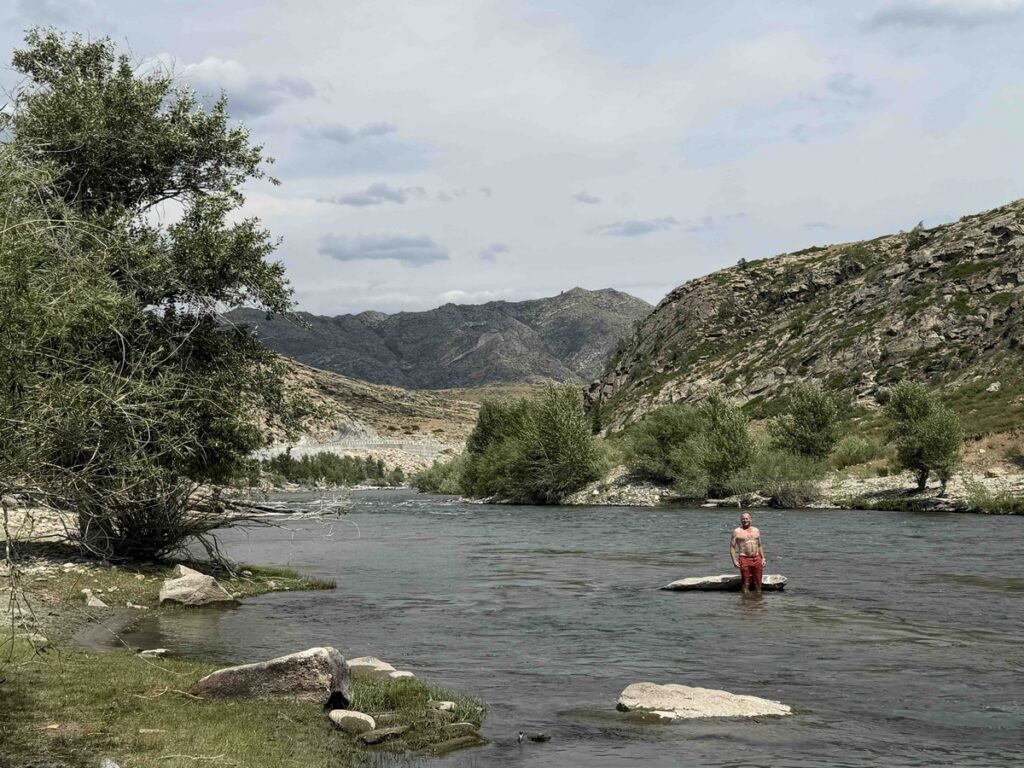
As cycle tourists we are trying to adapt. We get up in the dark at 4am to finish cycling by the middle of the day then hiding in the shade of trees and swimming frequently in rivers. We wear shirts that cool your skin when dampened by sweat (I wear long sleeved shirts but Chris remains resistant on that front). We cycle in wide-brimmed sunhats rather than helmets. We carry litres of water and drink until our stomachs feel bulging full. We swim in rivers and wear our wet clothes. However, we only have to achieve temporary acclimatisation. And if it all gets too much we can leave.
That’s not the case for many people in countries where the temperatures are now rising beyond anything they’ve previously experienced or are experiencing high temperatures earlier in the season and for longer. People’s houses and work buildings are becoming ovens that can only be escaped to the just-as-hot outdoors. During the recent European heat dome, children were sent back to overheating homes because schools were overheating. In many countries (including New Zealand), large windows, lack of eaves or window shades have become architecturally appealing with little thought given to climate forecasts.
“People are dying,” headlines read during the unusual heat events. This is true. People have died from heat. More people will die from heat. But it makes me wonder about Xinjiang and other desert areas. Humans have managed to survive, despite the temperatures. Do those who can’t stand heat succumb early in life? I remember science classes about body shape and heat in primary school – Masai people are tall and thin because that’s the best shape for dispersing heat. Eskimo are shorter and rounder because spherical is the best shape for keeping heat in. I wondered if this science was now very un-PC but it looks like it is still seen as valid. Further, people in hot arid places have increased limb vasodilation to increase heat loss through radiation and their sweat is more dilute, preventing excess loss of electrolytes. They have a lower proportion of fat on their bodies because fat keeps heat in. There are different adaptions again for people in hot humid as opposed to hot arid climates.
I wonder whether there is also particular mental stoicism required in extreme climates, itself an adaptation and a practice. Stoicism that downplays concerns about the comfort and longevity of one’s own life and those of others because that’s just how life is. I know I ask Chris to stop talking about how hot it is here because thinking about the heat doesn’t help one iota! And I’m not going to get longer thinner limbs in a hurry, either. I might manage to reduce my fat stores by cycling hard, although exercise produces heat which is a problem…
All I can say is, the nomadic people of Xinjiang and the Altai are tough!


Discover more from Jane Shearer
Subscribe to get the latest posts sent to your email.