
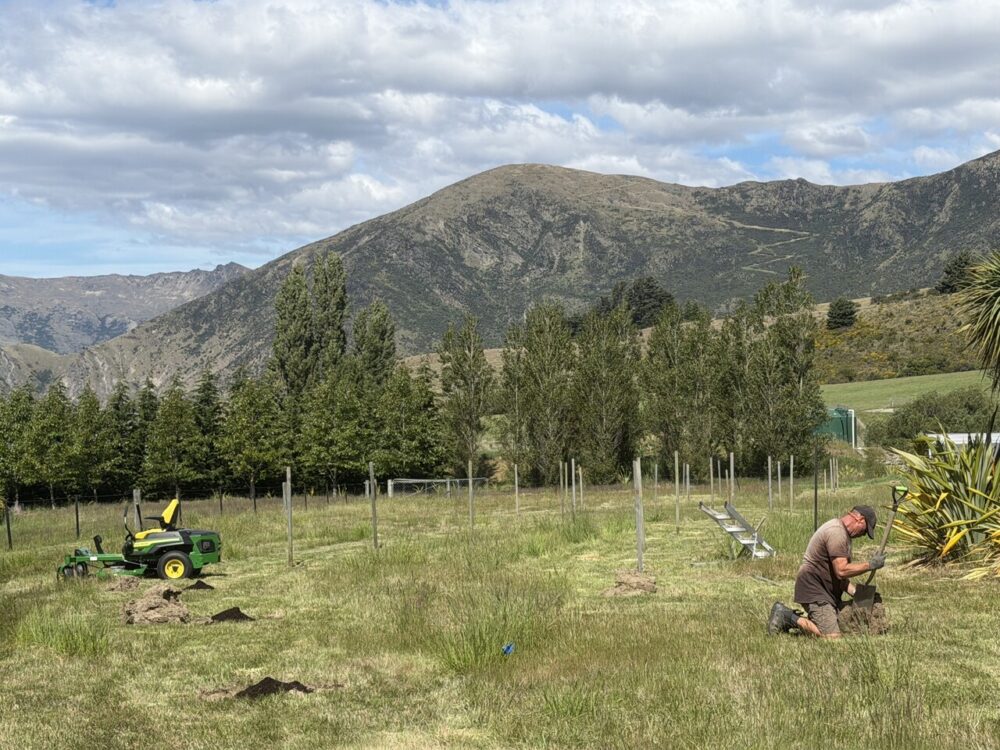
Chris digging tree holes at pa harakeke
It’s easy, digging holes. You just get a shovel and dig, right? However, when you have one hundred and twenty holes to dig, each 1m x 1m, it’s not quite so easy.
We are putting in a new belt of trees because the inevitable has happened. The Queenstown rich kid who owns the 40 hectares behind our property wants to play with it. He’s dividing off a few sections for his mates and to ‘finance his next venture’, which is stargazing cabins for tourists. Our new tree belt will stretch the length of our back boundary and be three trees deep – one Himalayan cedar and two poplars every 5 metres. That’s in the order of 120 trees; the final number will become apparent when we finish the holes.
Digging large numbers of tree holes has a lot in common with cycle touring. When you set off on a big ride, you can’t think about the total number of kilometres. So you break it down into daily amounts and then into ten kilometre stretches between breaks and then into 100 pedal stroke blocks when you are cycling up a steep hill. We have allocated ourselves five tree holes each a day because twelve days of digging seems doable and five holes also seems doable in an afternoon.
So slow, you say? How can it take them an afternoon to dig 5 holes each? Truthfully, it’s more like half an afternoon. But digging a hole has many steps:
- Cut the perimeter of the sods to be removed. We reuse all the grass because grass is hard to grow in a dry climate. Cutting sods often includes jumping on the spade blade. We’ve broken 6 spades since we came to pa harakeke.
- Cut the 1m block into 9 pieces with the spade.
- Lever the sods up trying to keep the bottom flat so they are easy to lay. Chris is much more careful than me – he grovels around on his knees whereas I prefer to lever the spade with my foot.
- Use the ‘pointy shovel’ (trenching tool) to break up the soil, creating a hole that slopes inwards to catch water.
We repeat the process for each of our five holes then complete hole prep by:
- Adding a 20-litre bucket of compost and digging it in.
- Putting a stake in each hole – Chris uses the crowbar to make a pre-hole then I thump them in with a mallet, standing on the ladder, while Chris holds the stake (slightly nervously).
- Putting the good sods on the trailer one by one then driving them to their new home.
- Putting the twitch-ridden or grass-grub damaged sods in the trailer and taking them a place where there’s a hole that needs to be filled or a mound that needs to be created.
While our hole digging might sound excessive, it’s hard for trees to establish in a place with hot, dry summers. We have typically lost less than 1% of the thousands of plants we put in so we figure we are doing something right.
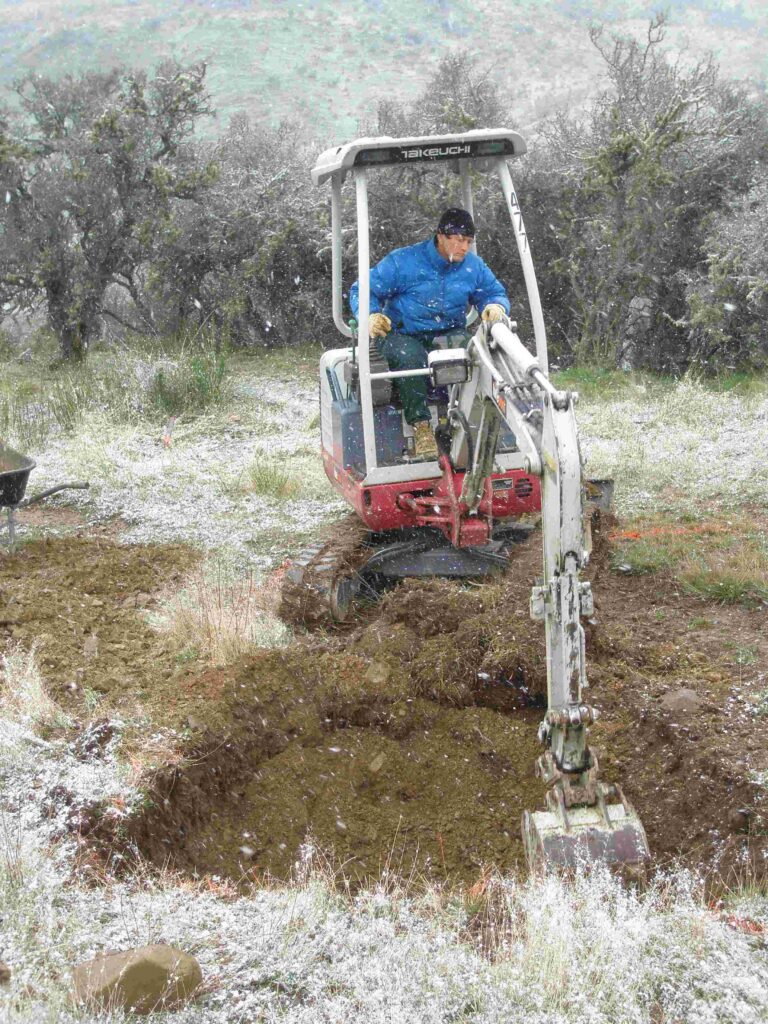
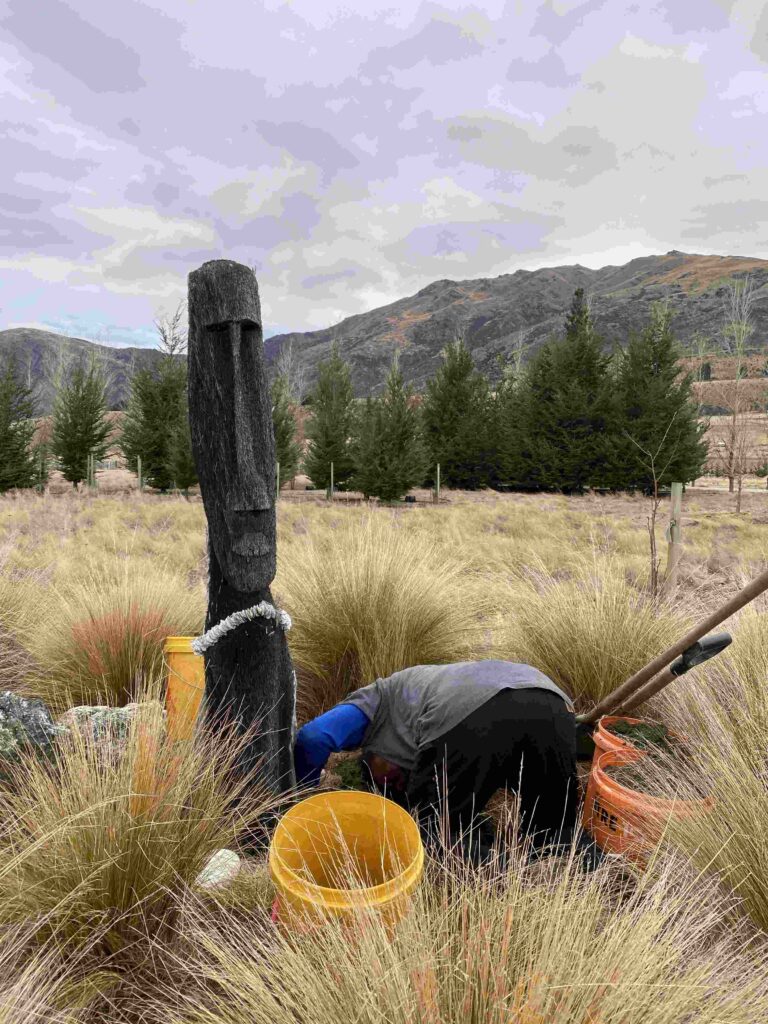
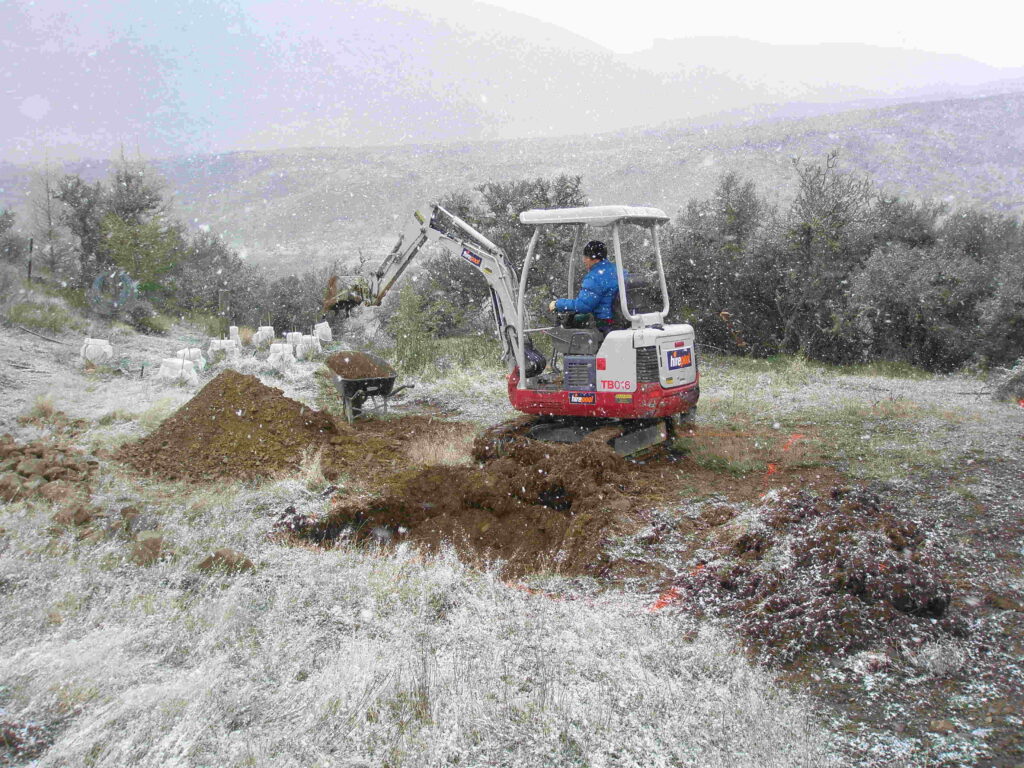
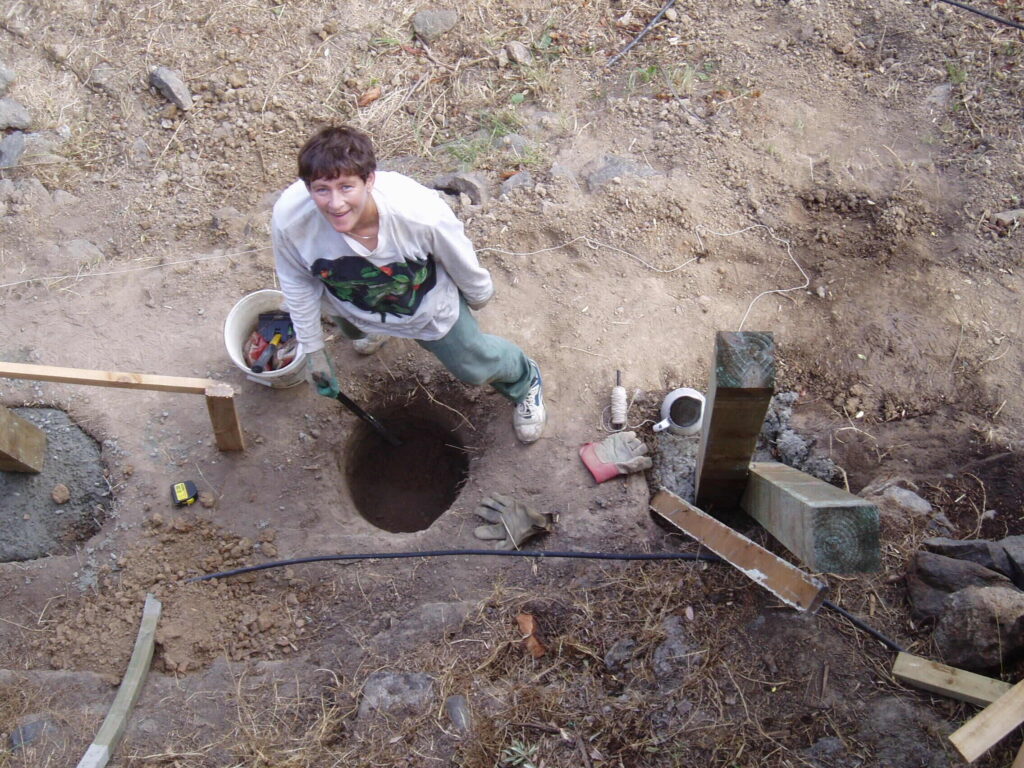
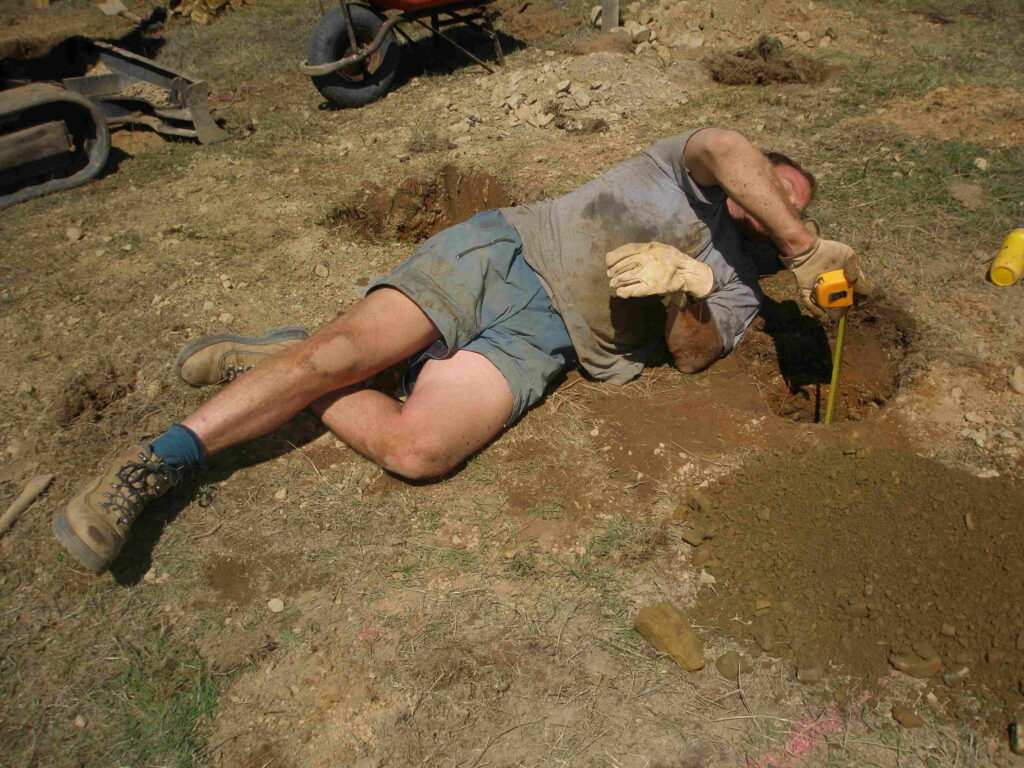
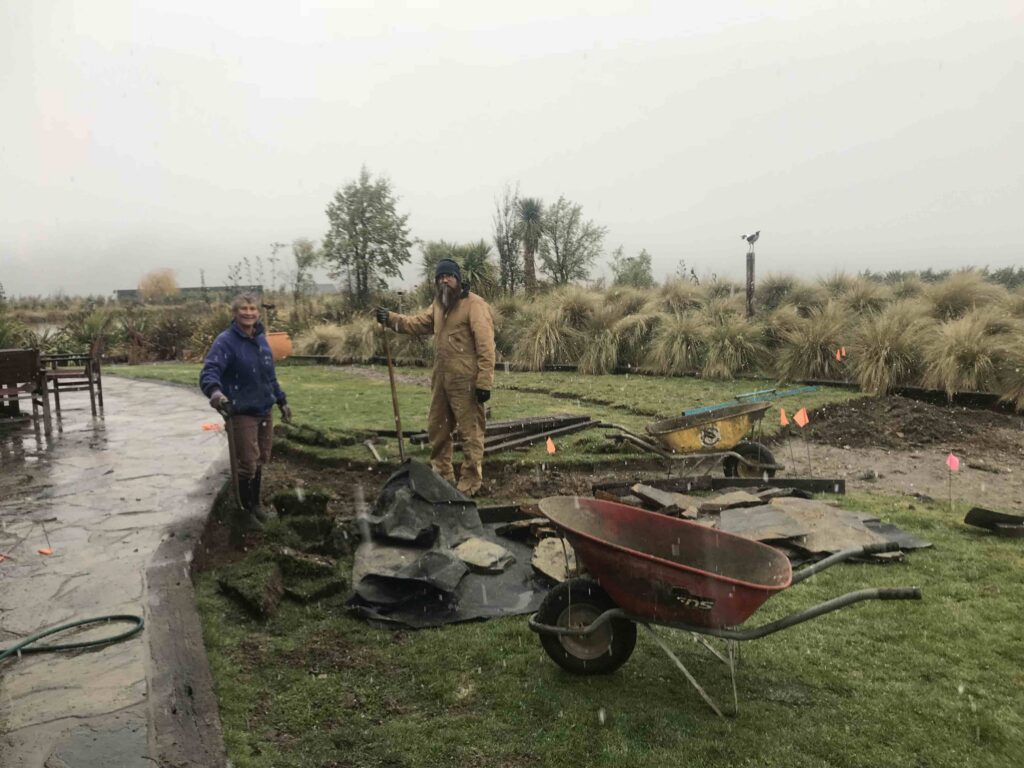
Holes we have dug – in Sumner for new foundations, in the snow at Castle Hill village for our bach (I love diggers), sod removal to lay pavers at pa harakeke, a grave for our cat,
It’s not all bad. While I’m digging holes, I’m free to listen to radio or podcasts or talking books. On the radio this week, top news was Anthropic’s IPO – the largest ever recorded with $81 billion worth of shares sold. Anthropic is not yet turning a profit; it lost $1.26B in the last 9 months. However, that was a lot less than the $5.22B it lost in the equivalent period a year earlier. Looking forward, Anthropic is committed to spending $900.9B with half of that to occur before 2030. These numbers are ridiculously large – NZ’s GDP was $249B in 2025.
There’s desperation in the air when people are competing to buy shares in a company burning money faster that it makes it. And in this case where the company seems to be digging a hole under its own feet. To generate revenue, AI companies need paying customers. The theory is organisations will pay to use AI to increase their own productivity because using AI will be cheaper and more efficient than human labour. In other words, instead of paying people, companies will pay AI companies. But who will then buy the products created through AI efficiencies when salaries are redirected from humans to AI companies?
I went to the ‘source’ and asked ChatGPT what it thought about this hole. Its conclusion? AI could make society enormously wealthy in terms of its capacity to produce goods and services, while simultaneously making a large proportion of its population poorer. That would be an extraordinary technological achievement but a failure of economic organisation.
I’m thinking hole digging will be less stressful if I switch to a Spanish radio station (given I’m trying to improve my Spanish for when we go to South America next year). I won’t be able to understand much of what they say but can listen to songs about unrequited love and broken hearts. These seem like relatively easy problems.


Discover more from Jane Shearer
Subscribe to get the latest posts sent to your email.



One thought on “How to dig a hole…”
Get an auger , battery powered, Metabo makes a dedicated one