
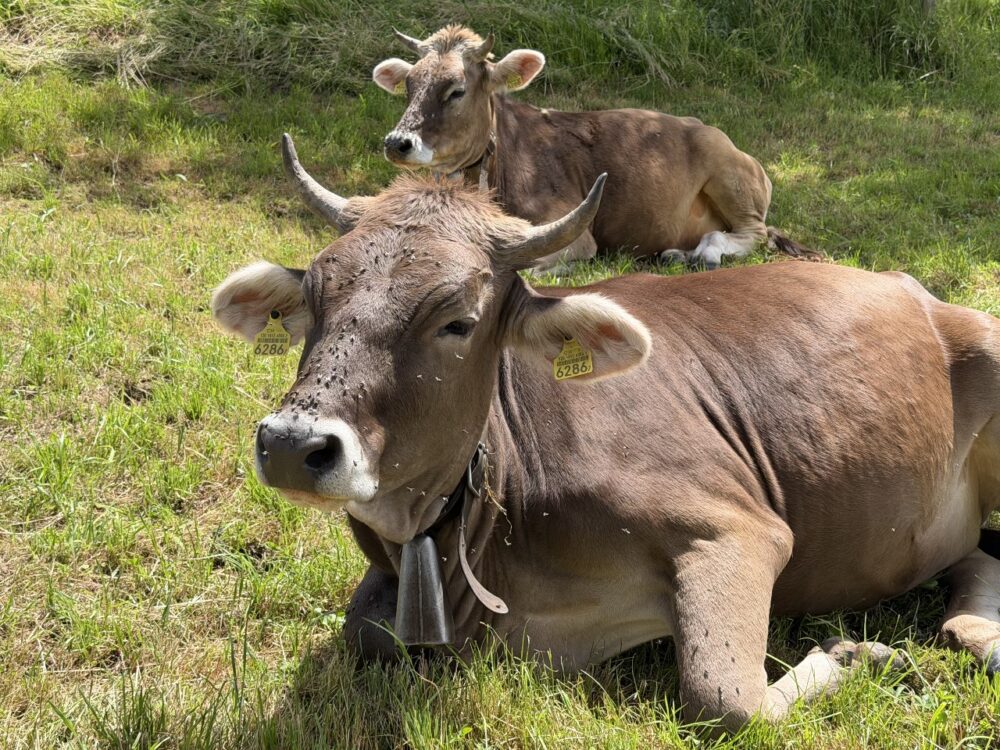
Cow bells are as intrinsic to the Swiss landscape as mountain peaks, turquoise lakes, good bakeries and wooden houses with steep roofs. But how would you like to have a permanently attached bell clinking and clanking as you move? And why would cows be any different to you?
Swiss cows (and cows in other countries where livestock roams freely) theoretically wear bells so their owners can locate them when they are out of view. There’s 900 years of cultural history around the bells in Switzerland. They are made from bronze using the lost-wax casting method and decorations are hand-painted or engraved into the metal. Each cow has a unique bell so Swiss farmers can track a particular animal by its note.
However, in Switzerland, it no longer seems relevant to have bells for tracking cows – all the livestock we have seen is grazing in pastures controlled by electric fencing. The use of single electric tape fencing is amazing to a New Zealander. New Zealand cows squash gates and require robust fencing together with an electric wire while Swiss cows turn back at a single live tape on lightweight standards pushed into the ground? Are they trained? Maybe they are. Near Gstaad we saw calves being trained with halters!
If wire fences aren’t sufficient, GPS trackers can easily locate cows; most farmers appear to have herds of some tens of cows, not hundreds or thousands. However, Swiss farmers are loathe to abandon tradition in the form of cow bells. This seems quite believable as Switzerland is a country where a referendum decided that mosque buildings can’t have domes because that doesn’t look Swiss.
In another aside, I like the idea of citizens being able to decide on issues by referendum – the country deciding what it wants to be as a whole, although that is also likely connected to Switzerland being the last country to give women the vote. The canton of Appenzell Innerrhoden finally gave in to allowing women to vote in 1991. A federal decision in 1971 had allowed women to vote at federal levels but it was a slow process from there to all cantons allowing women to vote; in Switzerland many decisions are made at canton level and there are cantonal referenda as well as national ones.



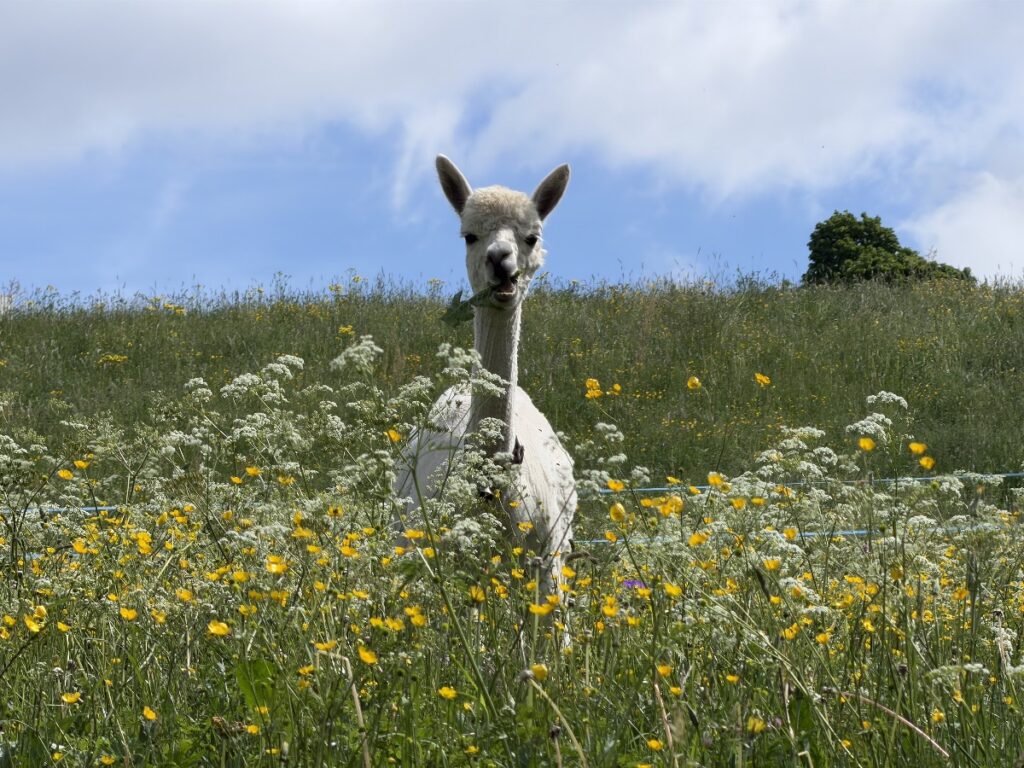


Iconic Switzerland (more pics here)
Surprisingly few studies come up onlineof you search for whether cow bells are cruel. A 2015 study and a 2017 study found cows may become unresponsive to sound after wearing cowbells (bells ring at 90-113dB and around 85 decibels is considered the acceptable sound level above which human hearing protection is required). Cows also ate less and moved their heads less when wearing bells. There was no sign of cows habituating to the bells, however the study only lasted 3 days. And that’s the sum total of then research I found. Another potential aspect of cow bell cruelty I noted is the clouds of flies around cows heads. To shake their head and disperse the flies requires the cow both to move the bell vigorously (Swiss cow bells are large) and make particularly loud donging noises. What a choice – tickling flies or deafen yourself!
Humans tend to think animals are very different to themselves; we do things to animals we wouldn’t allow done to humans because we don’t consider animal have the same ability to experience pain or emotions. I’ve heard fishers say what they do to fish is fine because fish don’t feel pain. There’s plenty of evidence fish feel pain but it’s inconvenient to think about fish feeling pain if you like catching them. Personally, I see game fishing and catch and release as processes of torturing animals that society bizarrely finds acceptable. I understand people wanting to catch food to eat, that’s a normal animal behaviour. But torturing other animals? Of course, I’ve owned cats…torturing other animals may well be as normal an animal behaviour as eating other animals is.
Let’s take a different perspective…why do we start off with an assumption that other animals don’t feel the same pain and emotions as humans? Why not start off with the assumption that that other animals do feel the same pain and emotions? I fear the answer is such a position would stop us doing what we want to do. So many things we find it convenient to do to animals would not be feasible if we took animal pain and emotion into account. Next time you hear the dinging of cowbells in Switzerland, or see stock in a truck in New Zealand, it’s worth imagining yourself in the same situation.

Discover more from Jane Shearer
Subscribe to get the latest posts sent to your email.