
Swiss eye candy to get your attention – Jane in the Gruyere Pays d’enhaut Regional Park
In a recent LinkedIn Post, the CEO of Bioscience NZ was excited about how his new entity can solve current societal problems. Specifically, the problem of people on GLP-1 drugs wanting targeted nutrient food in small portions.
My reaction was despair. Why? Because humans are driving themselves into ever-increasing loops of resource-wasteful behaviour built on previous poor behaviours, augmented by science.
In the twentieth and twenty-first centuries, there has been greater availability of food than ever before thanks to industrial agriculture, supported by science. Over the last thirty years, the ability of humans to manipulate foodstuffs (using science) has created ever higher proportions of highly processed foods which, undoubtedly, are changing people’s relationship with food along with their bodies.
Humans in places of excess food agonise about which foods they should eat, creating a complexity out of a simplicity (while humans in places with insufficient food simply starve). Michael Pollan put it beautifully: ‘Eat food. Not too much. Mostly plants.’ He has a helpful rulebook called, ‘How to Eat’. This includes suggestions like, ‘It’s not food if arrived in the window of your car.’ The exception might be if a cricket flew in your car window, although that’s becoming increasingly unlikely in the age of insect-apocalypse. The insect-apocalypse is different but related issue given disappearance of insects is closely related to food production through widespread use of agricultural chemicals in industrial agriculture and natural habitat being converted to farmland.
Western society has largely lost touch with the connections between food and land, plate and body. If there was one other piece of advice that should be widely spread about food, it’s ‘Grow some of your own‘. That way you relearn the connections and the value of food.
So where’s science in this thesis? After reading Axel Heiser’s LinkedIn post, I realised I have the mistaken belief that science should focus on the betterment of humanity. On reflection, I don’t know why I think this. Science is a system, a philosophy, that builds knowledge in the form of testable hypotheses and predictions about the universe. Science is not about ‘good’, it’s about ‘real’ and ‘provable’. Science doesn’t ask ‘should this be done’? Science asks, ‘can this be done’ (although engineering is even more focused on that question than science).
So when I read that the CEO of a science organisation is excited because science can be used to provide even more complex ‘food’ to people who are taking drugs (GLP-1s) which have been designed (using science) to help people who are eating more energy than their bodies can use in forms that damage their bodies. Good old science has allowed us to produce foodstuffs that harm us. It has provided drugs to counteract the effects of those foodstuffs. And now it can provide new foodstuffs to counter the effect of the drugs, which result in upset stomachs and lowered appetites.
What my illogical head says is, shouldn’t this CEO, and the scientists, be protesting against the growing plethora of highly processed food and the widespread use of GLP-1 drugs? Wouldn’t that be a better use of scientists’ time rather than making the next echelon of non-food foods?
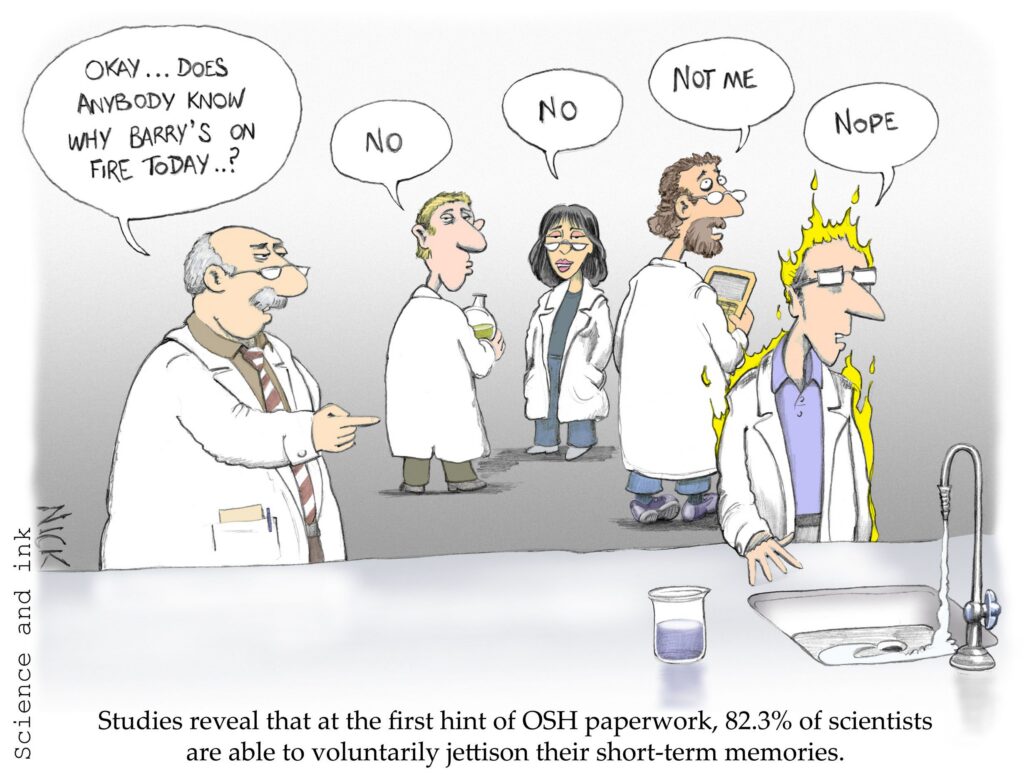
Really, how naïve am I? Scientists want jobs, just like everyone else. When scientist’s jobs are threatened they push back. Scientists (generally) enjoy their careers and want to keep on doing the fun intellectual challenges that come with the territory. And they want to feed and house and clothe themselves and their families. Pushing back against what their organisation, or the government, asks them to do isn’t going to achieve any of these things. If society, via the government, asks scientists to make ever weirder foodstuffs, that’s what the majority of scientists will do for very obvious reasons.
The question is, if we can’t rely on scientists to tell society that some investigations or lines of work are a bad idea, who can we rely on? Politicians?!
Discover more from Jane Shearer
Subscribe to get the latest posts sent to your email.