I couldn’t resist continuing the theme of how we look after reading an article about orca wearing dead salmon hats. I like to think that I’m in charge of my own style, but are any of us? Are we just kidding ourselves that we aren’t bothered by fashion norms?
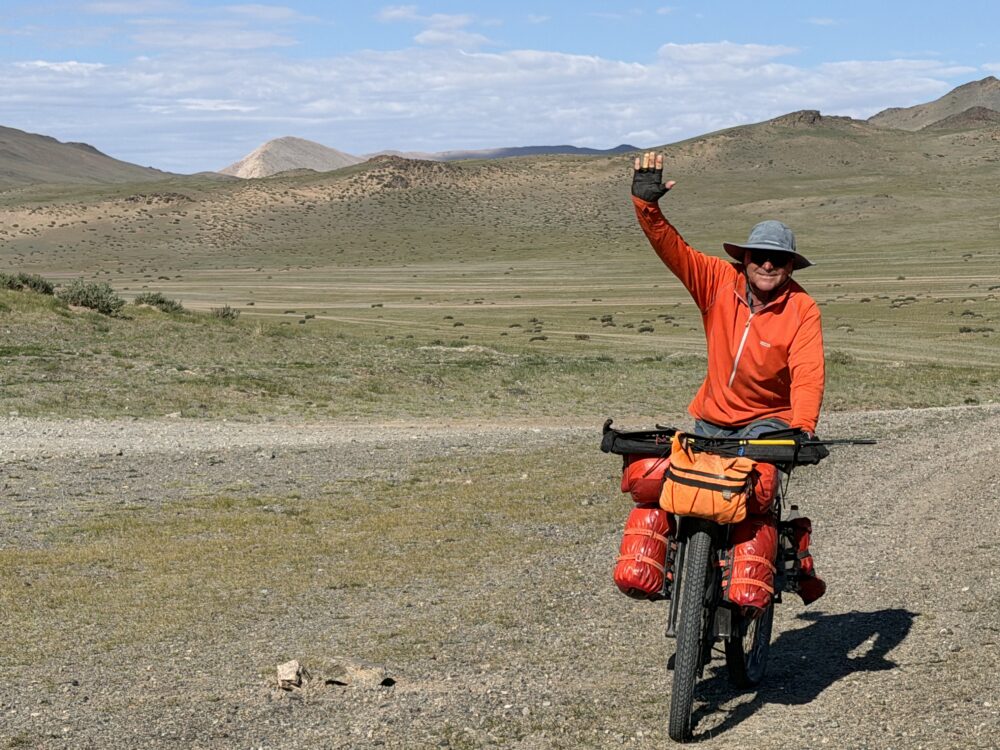
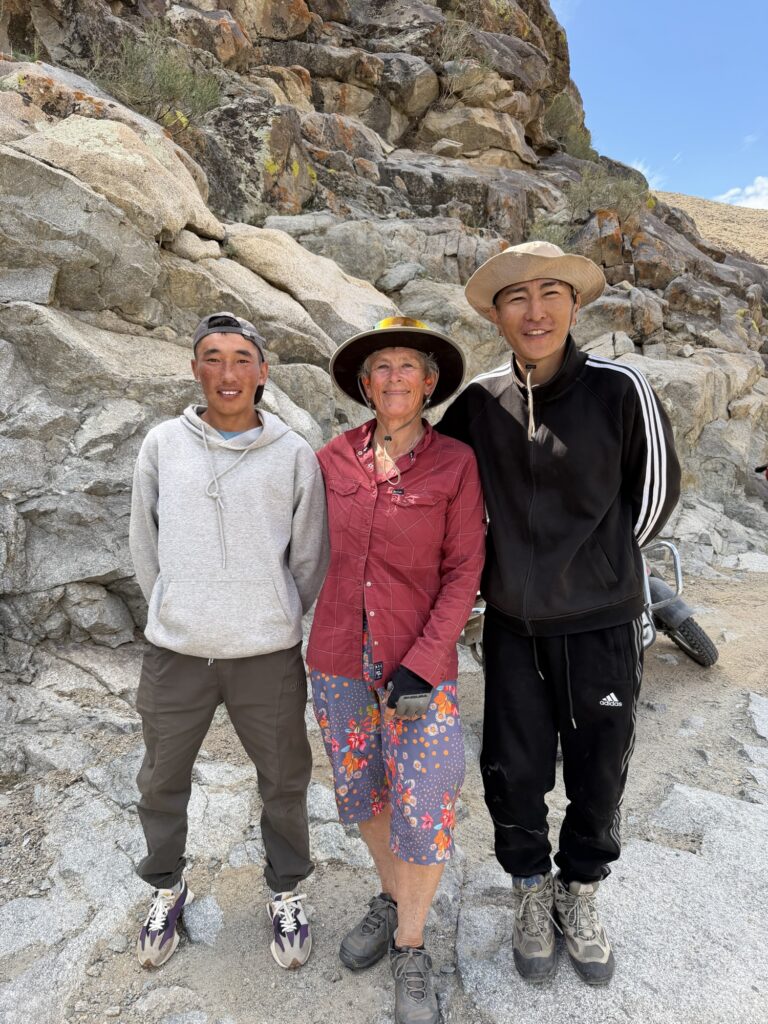
Both Chris and I like bright colours and he isn’t keen on his NRS long sleeved shirt because its light-coloured check reminds him of a business shirt. I deliberately take bright coloured clothes bikepacking. They are good for photography and I can see my own clothes (as opposed to my face or much of my body).
When I’m bikepacking I generally have two sets of colour – a blue set and a red set. That gives me some variety. It also gives me a pain in the rear end when my favourite clothing is no longer available in the colours I want. I’m equally driven by wanting particular colours that match and by performance. For example, NRS Guide Shirts are the best because they are full cover but cool you when you sweat. And Shredly shorts are the best because they cover my knees, are stretchy and comfortable and don’t fall apart over 3 months of cycling, as well as coming in fun colours. Chris laughs at me because I buy two (or sometimes even more) of the same piece of clothing when it’s the right thing in the right colour. But why spend more time shopping than you need when you’ve found the perfect item?
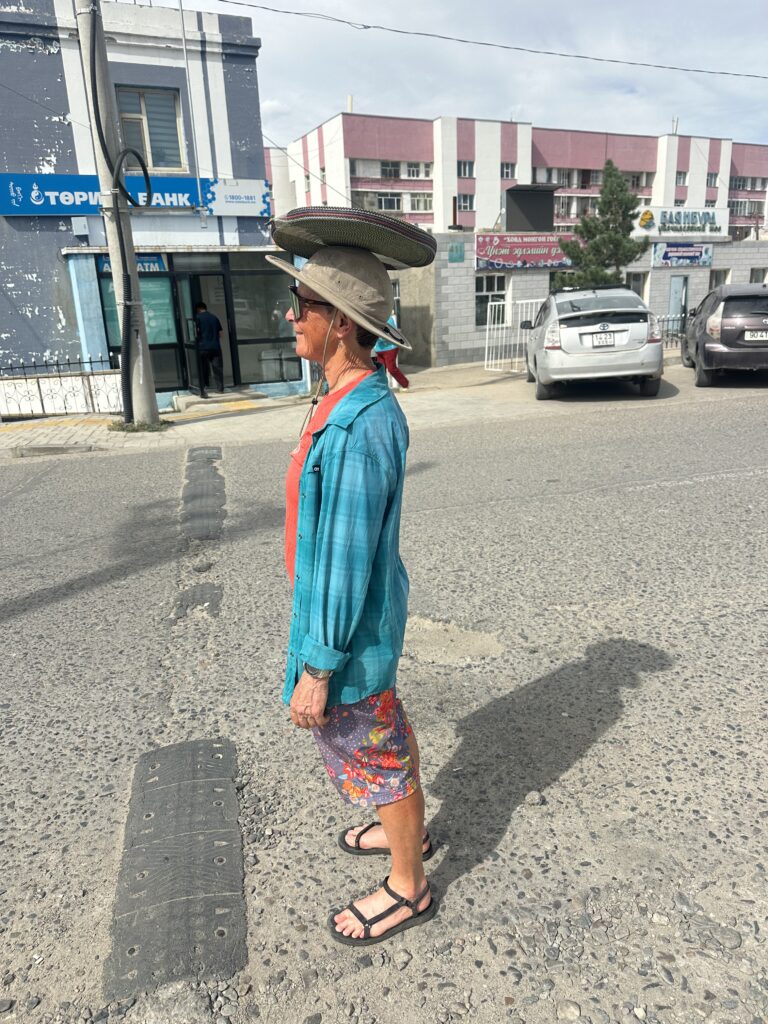
But going back to how much we are influenced by others…I walked through Khovd with a roll of webbing on my head that we bought to package up our cycling gear for the flight home. Balancing webbing on my head seemed like an entertaining thing to do as I visualised people I cycled by in Madagascar years ago who carried large bags of carrots or potatoes balanced on their heads. I considered myself doing a starter trial for head carrying. The local Mongolians didn’t seem look at me with webbing any more than they have done for the rest of our trip, which has been pretty much all the time.
And perhaps I was channeling orca with their salmon hats. Why did a group of North American West Coast orca start wearing dead salmon on their heads in 1987? No one knows. One orca started the trend then a other orca in the pod followed along. In 2024, a few orca were again spotted wearing dead salmon hats and people hypothesised it could be individuals involved in the trend the first time around. However, all of the explanations remain conjecture.
Chimpanzees at the Chimfunshi Wildlife Orphanage in Zambia developed a fashion trend of tucking blades of grass in their ears. One female started it, the rest of the troupe copied and then a second troupe started wearing blades of grass. There appeared to be no utility to the trend other than adornment. Most examples of animal ‘adornment’ are explained by humans as methods of camouflage. For example, decorator crabs cover their shells with sedentary plants and animals to hide themselves (and, in some cases, use poisonous species as an additional deterrent to predators).
Lammergeir, a type of vulture, colour themselves red by rubbing their feathers in damp red soil or bathing in iron oxide-coloured ponds. Why lammergeir colour themselves is unclear but scientists search for a reason related to an evolutionary advantage.
Why is it we consider only humans to be ‘above’ evolutionary explanations? We don’t go looking for an evolutionary advantage when people choose large cars over small ones, or wear clothing so tight they can’t breathe. In general, why do we create such a strong dividing line between humans and other animals? Other animals have emotions. Other animals use tools. Other animals play. Other animals learn from each other. But we still look to explain non-human behaviour through the narrow lens of evolutionary selection.
Darwin didn’t espouse such a restricted view. He considered nonhuman animals have the same cognitive abilities and emotions as humans and any differences are a matter of degree and not kind. And, while people (including me) find the idea of orca wearing dead salmon hats amusing, how much weirder is it than humans wearing stiletto heels that damage their feet and gait and prevent them moving easily through their environment? I am glad the salmon are dead, though.

Discover more from Jane Shearer
Subscribe to get the latest posts sent to your email.