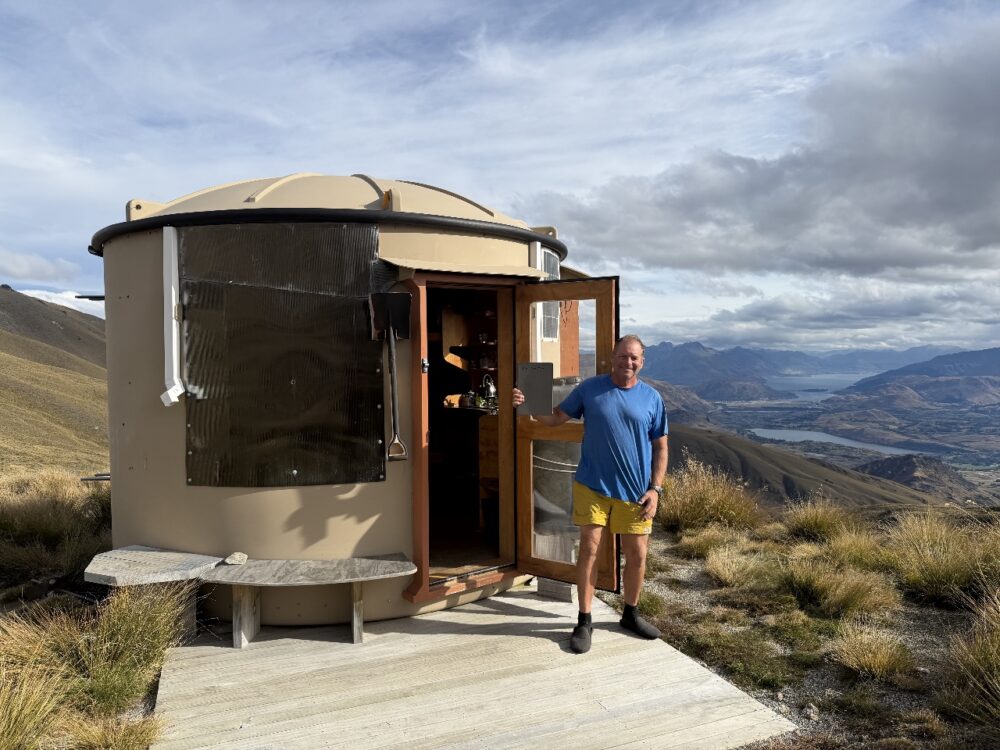
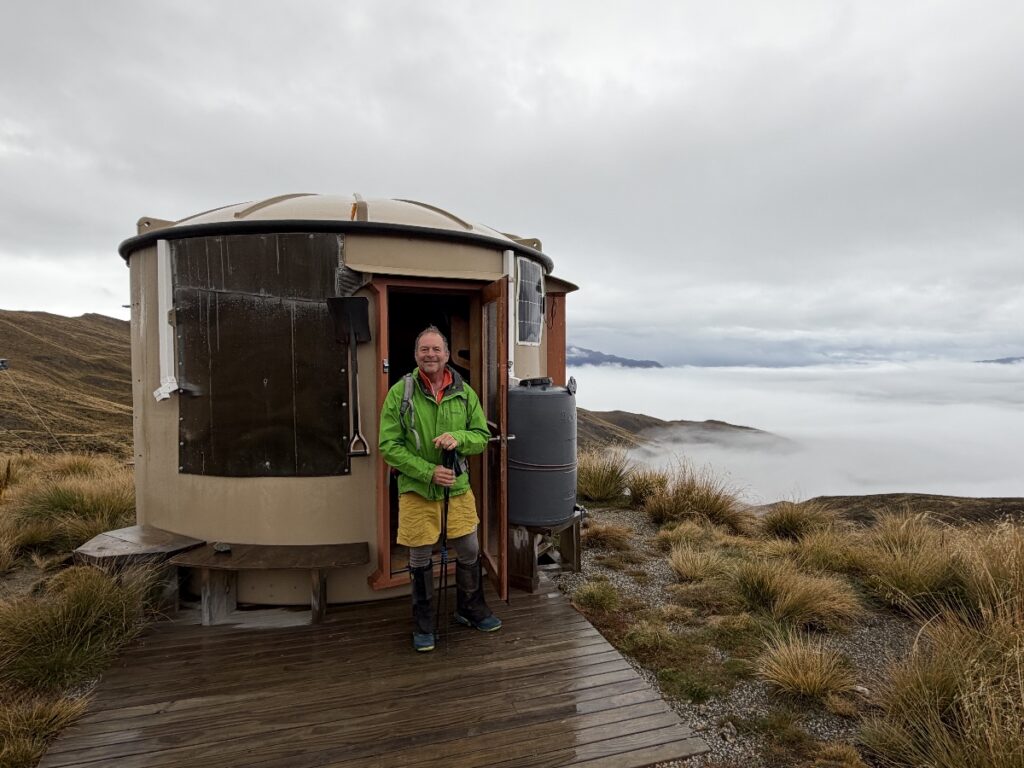
Crown Peak Turk in good weather & not so good
I’ll start with the win (for those of you who read last week’s blog) – our car’s engine and ECG coolant system will be replaced by Ford at no cost. While some people were concerned about my channelling Trump – seeing it as too risky, whatever the rationale – it worked for me. I’m hoping I don’t need to channel Trump again any time soon, though. I might start channeling other, less desirable aspects. I wouldn’t want to turn into a lying, misogynist, warmonger (who is not planning to go to the USA during the current administration)…
Given the global uncertainty promoted by the Iran War, everyone’s looking at safe havens and self-reliance. Tonight we are up in the safe haven of a Turk, cosy despite near gale force westerlies pummelling the Crown Range. There something special about small shelters in the mountains. You are close to the outdoors but secure. I wonder if that’s how the astronauts in Artemis 2 feel?
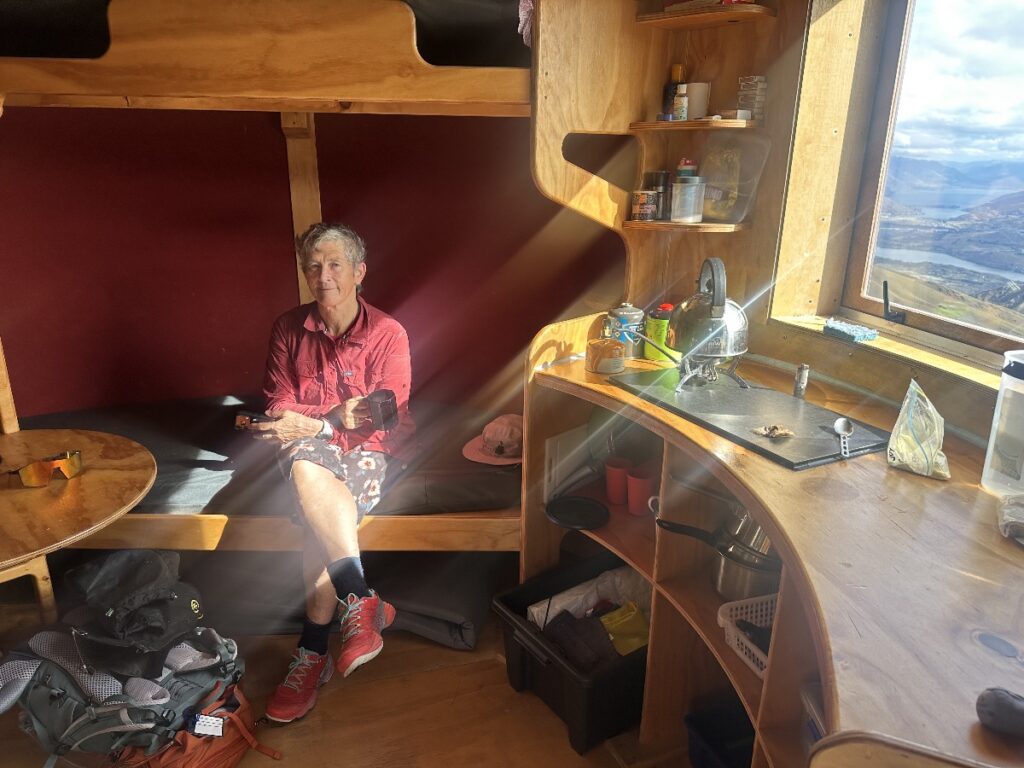
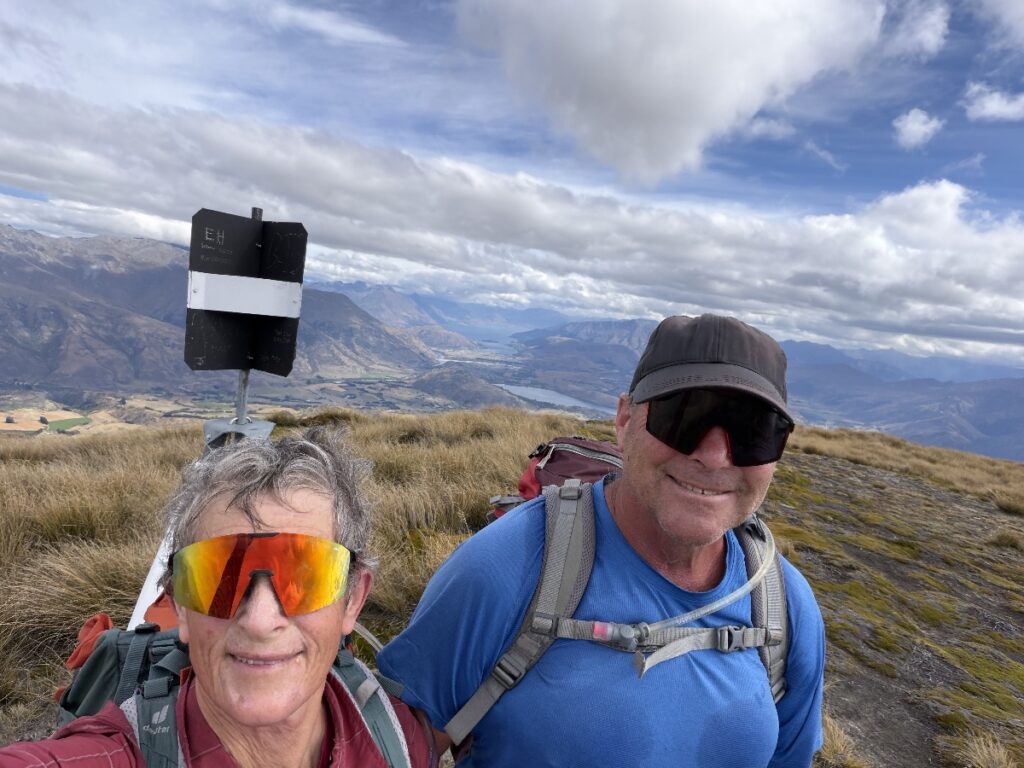
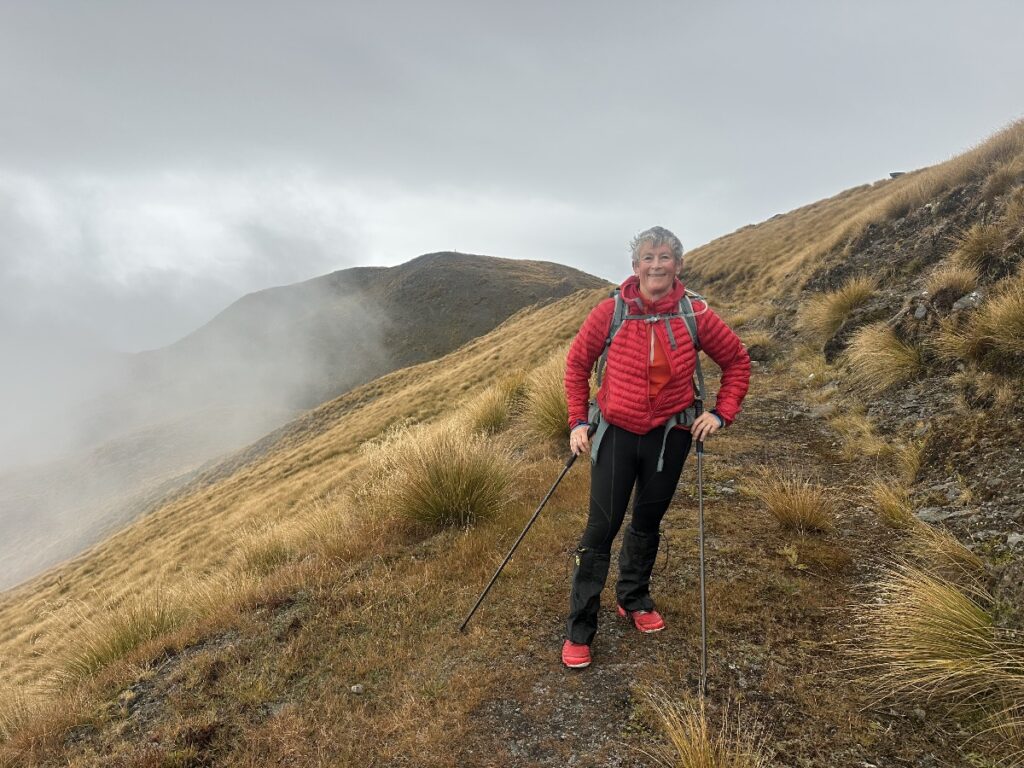
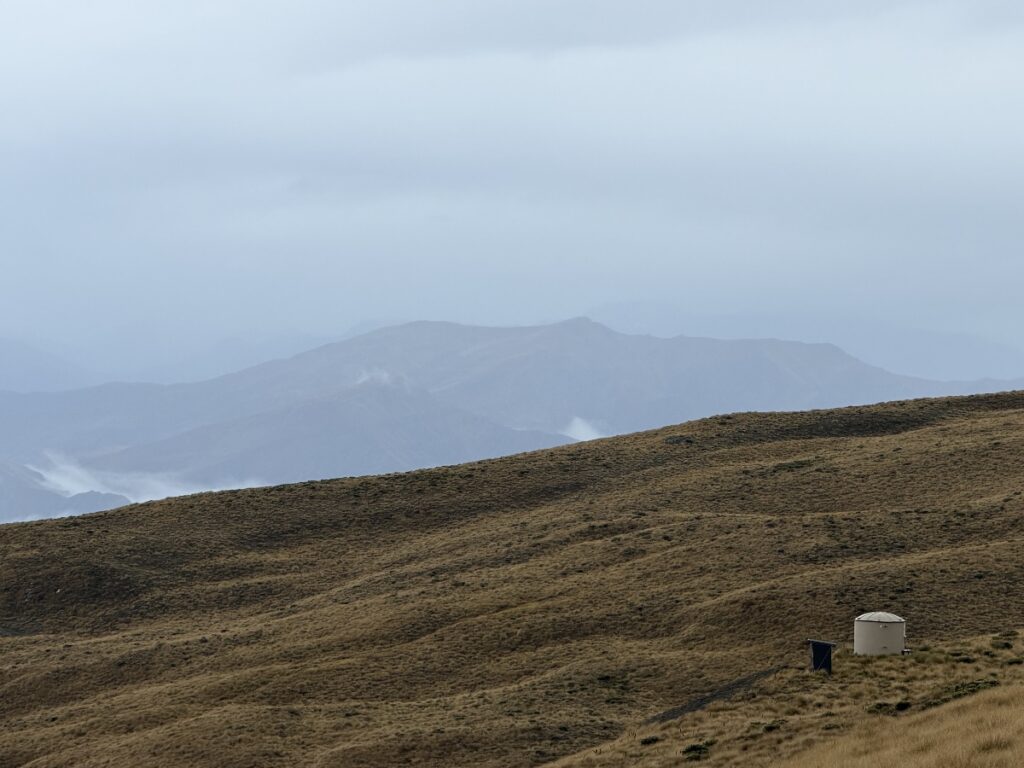
As safe as this Turk haven feels, though, it’s not a long term option (just like Artemis 2). Our food supplies and cooking fuel are limited while the small water tank wouldn’t last much of a dry spell. Humans can survive 3 days without water. We could last 1-2 months without food but I don’t think that would be much fun. The tussock and Spaniard outside don’t look like good eating.
New Zealand’s got the same sort of external dependencies as a Turk or a space craft (though not specifically food and water). To maintain our current society requires all sorts of things we don’t have in our country. Fossil fuels are just the start of what we lack. The list includes ingredients for fertiliser essential to our agriculture, materials to make chips essential to all the tech we use (including helium, not to mention the manufacturing capacity), aluminium to make cars (not that we have car, or aircraft manufacturing onshore) or windows and doors, copper for wires and electronics…
The closure of the Strait of Hormuz and resultant fuel shortages have made lots of countries consider how to be more self-reliant. In NZ, we are focusing on how to be less reliant on fossil fuels because our gas fields are declining, we’ve never had oil worth refining in country and we are a decade away from any new gas or oil fields being usable. And that’s if exploration finds any viable resources in the first place which is by no means a certainty given exploration to date. The resultant groundswell for electrification of everything combined with expanding wind and solar generation at scale is rising rapidly. It sounds sensible – doesn’t it?
Sadly, as Larry has written about in NZ Energy, “This narrative treats renewable electricity as though it exists in a parallel universe outside the industrial system that produces it. It does not. Wind turbines, solar panels, transmission equipment, batteries, inverters, heavy machinery, ports, cranes, foundations and maintenance fleets all emerge from the same global economy that is about to have an oil clot induced heart attack.” The means to collect wind and solar are deeply dependent on materials supply chains in which NZ is a taker; we can’t magic the infrastructure up.
There’s another problem too, building large energy infrastructure requires capital. Capital tends to vanish in times of inflation, rising interest rates and delivery risk. The Iran War is creating just these conditions – the price of oil influences everything so inflation is a given.
This is not to say you shouldn’t get home solar and a battery (if you can find and afford them). Chris and I love our PV and battery in power outages. The solar panel in the Crown Peak Turk means there are lights and we can charge our devices. Our EV, parked at the Crown Range Saddle, means we don’t think about petrol prices because we charge it off our roof. However, what works for a household or a Turk does not necessarily work at country scale. Houses generally rely on the national grid when their solar panels aren’t generating enough power for their needs. But what’s the national backup when renewable generation is low? Currently it’s gas and coal-fired power stations, both of which we want to get rid of. Lake Onslow pumped storage is back on the project table in the Fast Track process although it makes as little intuitive financial sense as it did the first time around.
I’m not going to solve the national energy strategy here but it definitely isn’t as simple as building lots of wind and solar. We need better planning than a simple reaction. As a country, we need to think about all the forms of energy that might be made available (onshore or imported, geothermal, hydro, nuclear, fossil fuels, solar, wind), how much control we have over their availability, how long term they will be available, the energy investment required to access the energy (how much energy does building and maintaining the infrastructure require vs the amount of energy generated), and the environmental impact of each form of energy. We need to consider the best mix of these potential sources in relation to getting the amount of energy we would like when we want it with enough flexibility and resilience when situations change.
Tricky…I hope there are some really good people left in Wellington ministries who can tackle the problem. Because a rushed reaction to this energy crisis could leave us just as vulnerable in the next one.
Discover more from Jane Shearer
Subscribe to get the latest posts sent to your email.